
Tour Operator vs Travel Agent: What's the Difference in 2026?

"People use 'tour operator' and 'travel agent' as if they mean the same job. They do not. One builds the holiday from scratch by contracting hotels, transport and guides; the other sells it — plus flights and stays — to you. Knowing the difference decides which business you should actually start."
In our travel and tourism classes at Wings Institute in Vadodara, this is the distinction that unlocks the whole industry for students. Once you see that a tour operator manufactures the holiday and a travel agent sells it, every other piece — commissions, markups, risk, who you partner with — falls into place. Let us make it concrete.
The core difference in one line
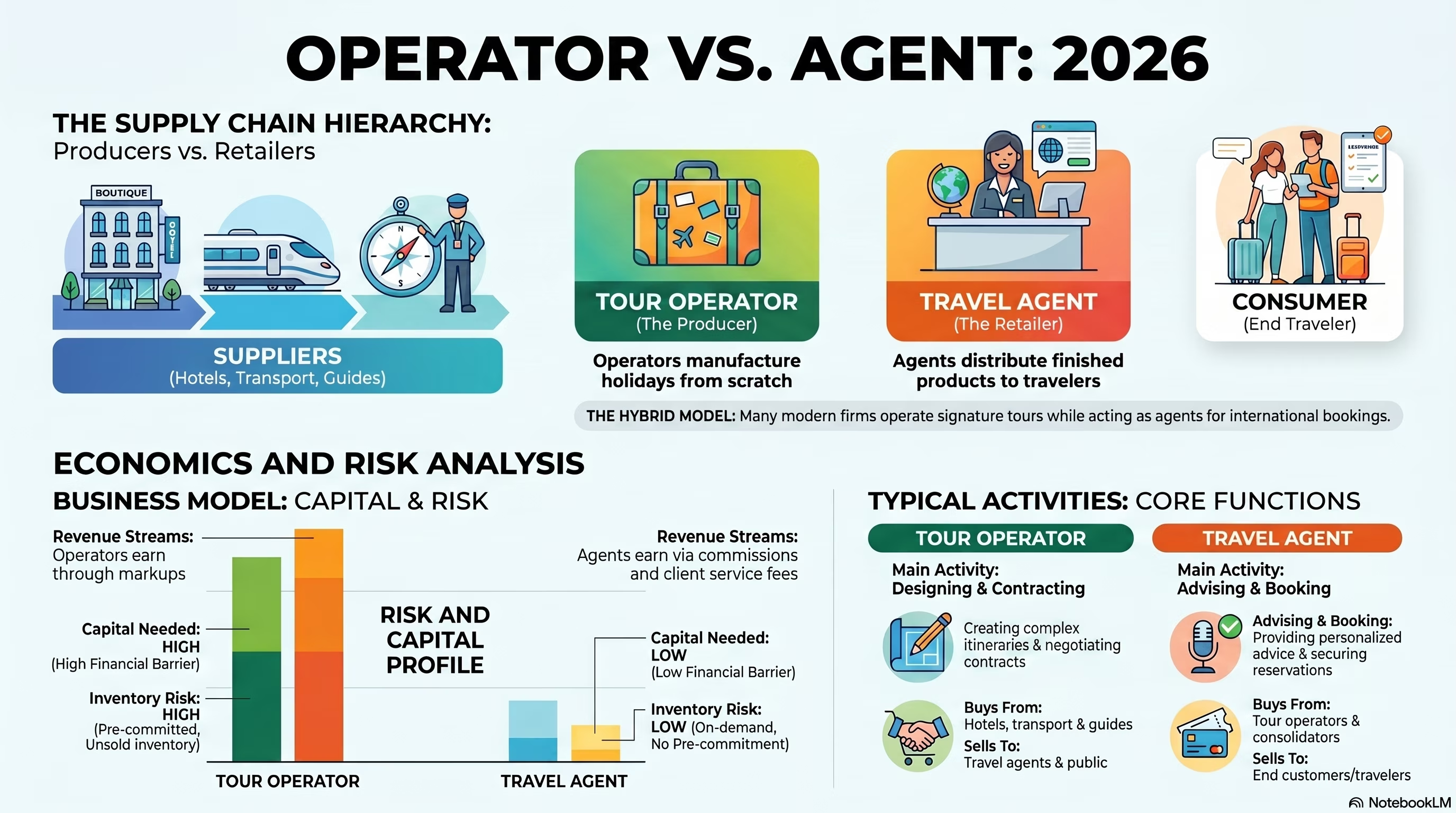
A tour operator creates the product; a travel agent distributes it. The operator negotiates and contracts with hotels, transporters and local guides to assemble a package at a wholesale cost, often committing to inventory in advance. The agent takes that finished package — or individual flights and hotels — and sells it to the traveller, adding service value and earning a commission or fee.
| Aspect | Tour Operator | Travel Agent |
|---|---|---|
| Role in chain | Producer / wholesaler | Retailer / distributor |
| Main activity | Designs & contracts packages | Sells packages, flights, hotels |
| Buys from | Hotels, transport, DMCs, guides | Tour operators, consolidators, suppliers |
| Sells to | Travel agents & sometimes public | End customers / travellers |
| Revenue model | Markup on contracted package | Commission or service fee |
| Inventory risk | Higher (may pre-commit) | Lower (sells on demand) |
| Capital needed | Generally higher | Generally lower |
“Wonderful experience and amazing faculties😊.. impeessed by the facilities and the athmosphere”
"Tour operator and travel agent are just two names for the same business."
They are different links in the supply chain. A tour operator builds and contracts the package and carries inventory risk; a travel agent sells finished products to travellers for commission. Many firms do both, but the roles, risk and revenue models are genuinely distinct.
How each one makes money
A tour operator earns by buying components wholesale and selling the bundled package above cost — their margin is the markup, and their risk is unsold pre-booked inventory. A travel agent earns mainly through commissions from operators and suppliers, plus service or convenience fees charged to clients. In 2026, with airline commissions near zero, agents lean heavily on packages, hotels and fees for income.
A tour operator typically
- 1Researches destinations and designs itineraries
- 2Negotiates rates and contracts with hotels and transport
- 3Manages ground logistics, guides and DMCs
- 4Sets package pricing and handles operational risk
A travel agent typically
- 1Advises clients and matches them to suitable trips
- 2Books flights, hotels and packages on their behalf
- 3Handles documentation, payments and changes
- 4Earns commission and service fees, not inventory markup
Expert Insight
"If you are new with limited capital, start as a travel agent — lower risk, you sell what others have built. Move into tour operating once you understand demand, have supplier relationships and can confidently contract inventory without getting stuck with unsold stock."
Why many businesses blur the line
In practice, plenty of Indian travel companies do both: they operate their own signature tours (say, a Gujarat heritage circuit) while also acting as agents reselling other operators' international packages and booking flights. This hybrid model spreads risk and revenue — but you still need to know which hat you are wearing on each booking, because the economics and responsibilities differ.
Decide your model
- Assess your capital and appetite for inventory risk
- Map which suppliers you can realistically contract
- Choose a niche (the package you could build best)
- Decide: pure agent, pure operator, or hybrid
- Build the matching skills — contracting vs selling
Understanding tour operator versus travel agent is the foundation of a smart travel business decision in 2026. Operators build and carry risk; agents sell and earn commission; many do both. To learn the contracting, costing, GDS and selling skills behind either role, explore our travel and tourism programme, check placement support outcomes, or contact us to discuss which path fits you.
“Wings institute is very good institute.. This institute is very helpful for jobs... The faculty of wings are also very good... Come to the wings and make a career...”

Silvans macwan
Verified Google ReviewFrequently Asked Questions
What is the difference between a tour operator and a travel agent?
Who earns more, a tour operator or a travel agent?
Can one business be both a tour operator and a travel agent?
Which is easier to start in India, a tour operation or an agency?
Do tour operators sell directly to travellers?
“Joining Wings Institute was the best decision I ever made! The environment is so positive and encouraging. The faculty gives individual attention to every student and helps polish our personality, grooming, and interview skills. Truly the best aviation and cabin crew institute in Gujarat.”
Explore Travel & Tourism
Don't just read about it. Experience it. Use our AI tools to assess your current standing for free.
Action Now