Professional Certificate in Culinary Arts
Close your eyes and imagine: the sizzle of butter hitting a hot pan, the aromatic symphony of garlic and herbs releasing their essence, the satisfying crunch of a perfectly caramelised onion, and the velvety smoothness of a sauce reduced to perfection. This is the world of culinary arts—where science meets artistry, where precision meets passion, and where raw ingredients transform into experiences that linger in memory long after the last bite.
But let us be clear: becoming a professional chef is not about following YouTube tutorials or recreating Instagram-worthy dishes at home. It is about mastering heat control under pressure, understanding the chemistry of ingredients, developing knife skills that become second nature, and building the stamina to work 10-hour shifts in environments that exceed 40°C. It is a high-discipline profession that demands excellence.
Why Culinary Arts at Wings Institute?
At Wings Institute, Vadodara—Gujarat's premier hospitality training institute since 2008—we have trained hundreds of chefs who now work in the finest kitchens across India, Dubai, Singapore, and on international cruise ships. Our approach combines:
- 70% Practical Training: You learn by doing, not just watching
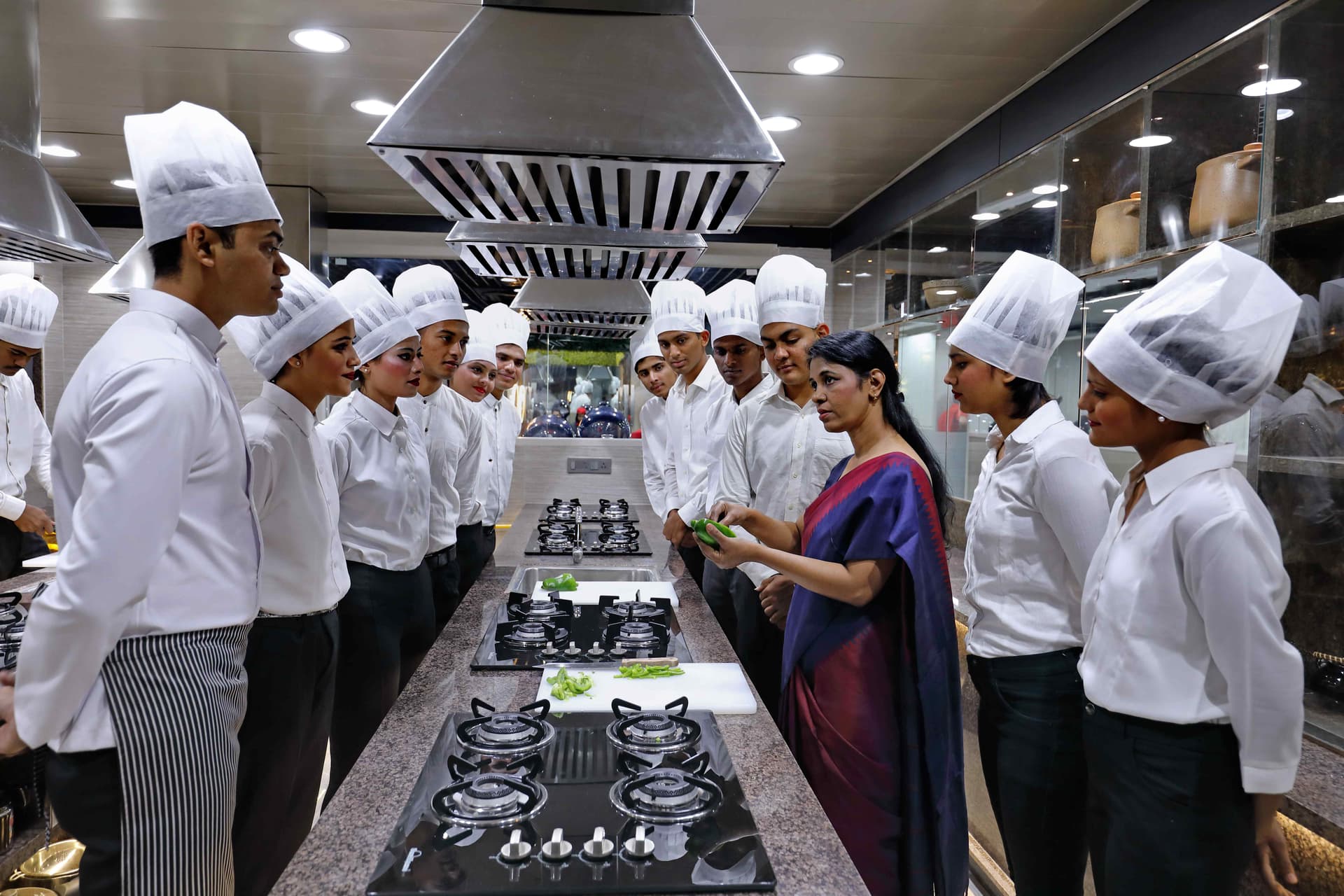
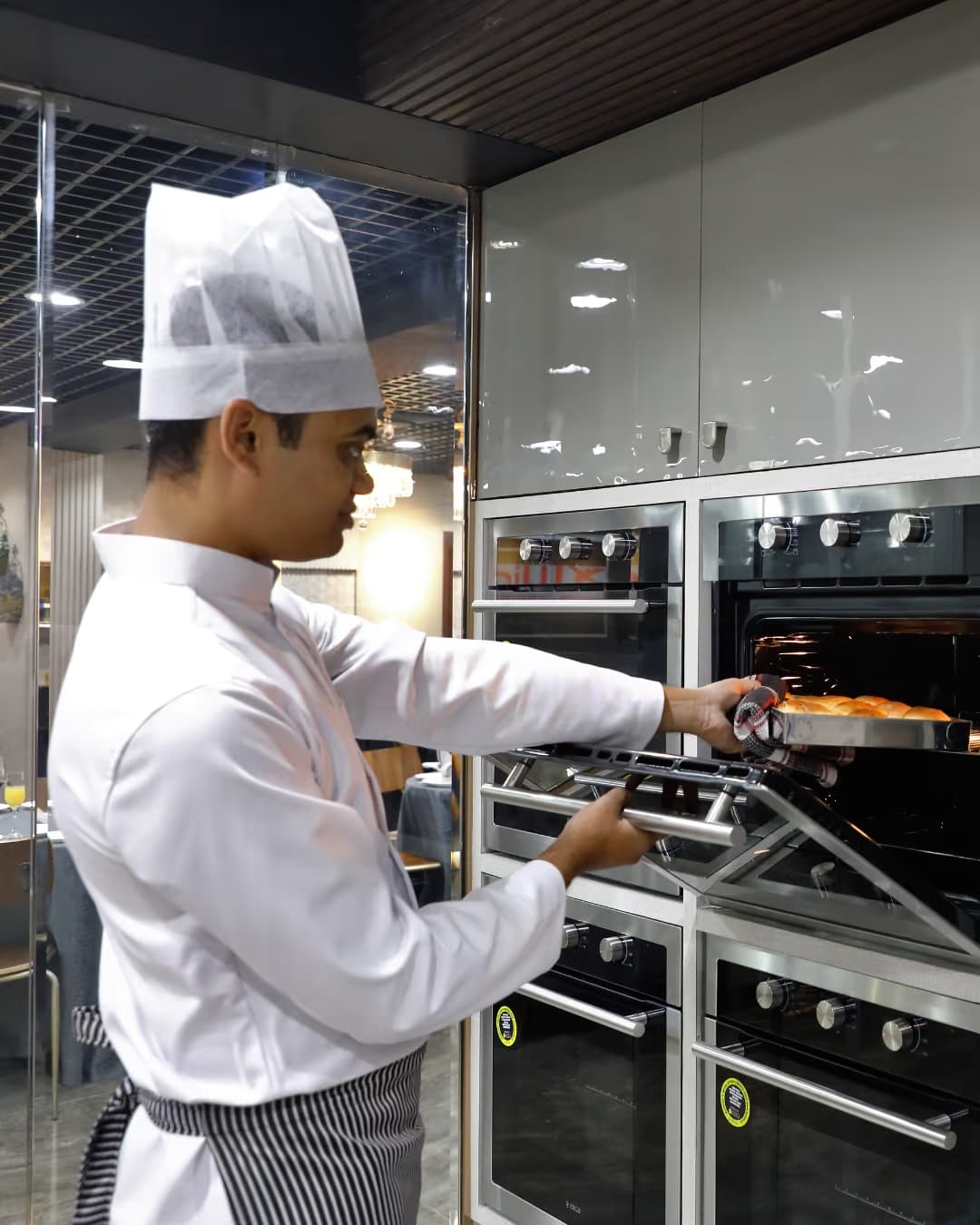
- Commercial Kitchen Equipment: Train on the similar equipment used in 5-star hotels
- Industry Expert Faculty: Master Chefs with decades of experience
- 6-Month Hotel Internship: Real kitchen experience before you graduate
Whether you dream of becoming a Sous Chef at a luxury hotel, opening your own café in Alkapuri, launching a cloud kitchen for food delivery apps, or working aboard an international cruise ship—this programme equips you with the skills, certifications, and industry connections to make it happen.
From Knife Skills to Plating: The Complete Syllabus
Our curriculum is designed to take you from absolute beginner to job-ready professional. Every module builds upon the previous one, creating a comprehensive foundation that hotels trust and respect.
1Knife Skills & Kitchen Fundamentals
The knife is a chef's most important tool. Master it, and everything else becomes easier.
Classical Cuts You'll Master:
- • Julienne – Fine matchstick cuts (3mm × 3mm × 5cm)
- • Brunoise – Tiny cubes (3mm × 3mm × 3mm)
- • Chiffonade – Ribbon cuts for herbs and leaves
- • Batonnet – Stick cuts for fries and vegetables
- • Mirepoix – Rough cuts for stocks and bases
- • Paysanne – Thin slices for soups
Kitchen Fundamentals:
- • Kitchen hygiene & HACCP protocols
- • Mise en place (preparation and organisation)
- • Heat control and cooking temperatures
- • Food safety and storage
- • Equipment operation and maintenance
- • Kitchen hierarchy and communication
2Indian Cuisine & Regional Specialities
India's culinary diversity is unmatched. You'll master techniques from across the subcontinent.
Regional Cuisines:
- • Punjabi: dal makhani, tandoori preparations
- • Mughlai: Biryanis, kormas, kebabs
- • South Indian: Dosas, sambhar, rasam, appam
- • Gujarati: Dhokla, thepla, undhiyu, shrikhand
- • Bengali: sweets
Tandoor Cooking:
- • Tandoori Veg
- • Naan, roti, and kulcha
- • Harabhara Kebab
- • Temperature control in clay ovens
- • Marination techniques for tandoor
*You'll train on an actual tandoor oven in our commercial kitchen
3Bakery & Confectionery
The sweet science of baking—where precision meets creativity.
Breads:
- • White bread & whole wheat
- • Focaccia & ciabatta
- • Brioche & dinner rolls
- • Pizza dough
Pastries & Cakes:
- • Puff pastry & croissants
- • Sponge, pound & chiffon cakes
- • Eggless cake variants
- • Fondant & ganache decoration
Desserts:
- • Cookies & brownies
- • Custards & puddings
- • Mousse & cheesecake
- • Indian sweets (gulab jamun, kheer)
4Continental & International Cuisine
Master the classical techniques that form the foundation of Western cooking.
Mother Sauces (Les Sauces Mères):
- • Béchamel – White sauce base
- • Velouté – Light stock-based sauce
- • Espagnole – Brown sauce base
- • Hollandaise – Emulsion sauce
- • Tomato – Red sauce base
Stocks & Plating:
- • Vegetable stock, court-bouillon, clear broth
- • Consommé and clarification
- • Modern plating techniques
- • Garnishing and presentation
- • Italian, Chinese & Thai basics
Want comprehensive hospitality training beyond culinary? Our Hotel Management course covers Front Office, Housekeeping, and F&B Service alongside kitchen training.
Commercial Kitchen Training: Why Home Equipment Fails
Here is a truth that surprises many aspiring chefs: training on home kitchen equipment is almost worthless for professional careers. A home gas stove produces approximately 2,000-3,000 BTUs of heat. A commercial high-pressure burner? 25,000-50,000 BTUs. That's 10-20x more power. Dishes that take 30 minutes at home are finished in 5 minutes in a professional kitchen.
Our Commercial Kitchen Equipment
At Wings Institute, you train on the exact equipment used in 5-star hotel kitchens:
Cooking Equipment
- High-pressure gas burners (6-12 burner commercial ranges)
- Industrial convection ovens for consistent baking
- Salamanders for gratinating and finishing
- Commercial deep fryers with temperature controls
- Tandoor oven for authentic Indian cooking
Preparation & Storage
- Stainless steel workstations (hygienic prep surfaces)
- Commercial refrigeration units
- Planetary mixers for dough and batters
- Proofing cabinets for bread fermentation
- Professional knife sets for each student
Why This Matters: Hotels hire chefs who can produce 50 identical plates in 20 minutes. This requires muscle memory developed on commercial equipment. Students trained on home stoves need 3-6 months of "unlearning" when they join hotel kitchens—time that trained professionals use to get promoted.
Chefs & Cloud Kitchens: The Career Outlook
The culinary industry is undergoing a massive transformation. While traditional hotel kitchens remain a strong career path, new opportunities have emerged that didn't exist a decade ago. Let us explore both.
Traditional Career Progression
| Position | Experience | Domestic Salary | International |
|---|---|---|---|
| Commis III (Trainee) | 0-1 Year | ₹12,000 - ₹18,000 | ₹25,000 - ₹40,000 |
| Commis II | 1-2 Years | ₹18,000 - ₹25,000 | ₹40,000 - ₹60,000 |
| Commis I | 2-4 Years | ₹25,000 - ₹35,000 | ₹60,000 - ₹80,000 |
| Demi Chef de Partie | 4-6 Years | ₹35,000 - ₹50,000 | ₹80,000 - ₹1,20,000 |
| Chef de Partie (CDP) | 6-8 Years | ₹50,000 - ₹70,000 | ₹1,00,000 - ₹1,50,000 |
| Sous Chef | 8-12 Years | ₹70,000 - ₹1,00,000 | ₹1,50,000 - ₹2,50,000 |
| Executive Chef | 12+ Years | ₹1,00,000 - ₹3,00,000 | ₹3,00,000+ |
The Cloud Kitchen Revolution in Gujarat
Gujarat is experiencing a cloud kitchen boom. Cities like Vadodara, Ahmedabad, Surat, and Rajkot have seen a 300% increase in food delivery orders since 2020. Cloud kitchens—delivery-only restaurants without dine-in facilities—offer aspiring "Chefpreneurs" a low-risk entry into food entrepreneurship.
Why Cloud Kitchens Work in Gujarat:
- Lower rent (no prime location needed)
- No front-of-house staff required
- Start with ₹5-10 Lakhs investment
- Swiggy/Zomato handle marketing & delivery
Gujarat's Café Culture:
- Young population driving café demand
- Alkapuri, Race Course & Fatehgunj hotspots
- Speciality coffee & dessert cafés thriving
- Our course covers café operations & costing
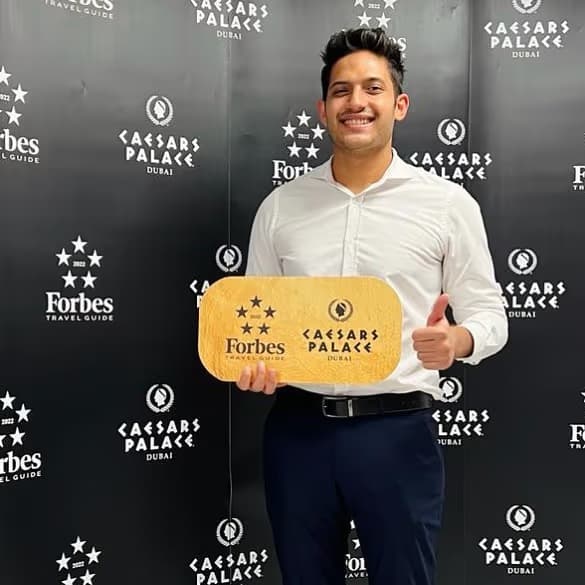
Alumni Spotlight: Maaz Shaikh

Maaz Shaikh
F&B Team | Hell's Kitchen by Gordon Ramsay, Dubai
From Vadodara to one of the world's most famous restaurant brands. Maaz completed his culinary training at Wings Institute, interned at a 5-star property, and is now part of the team at Gordon Ramsay's Hell's Kitchen in Dubai. His journey proves that with the right training and dedication, Gujarati students can reach the pinnacle of global gastronomy.
A Day in the Life of a Wings Culinary Student
"The alarm rings at 5:30 AM. Rohan—a boy from a small dhaba in Dahod—ties his apron in front of a mirror. His hands, once only familiar with rotis on a tawa, now move with the precision of a surgeon. Today, he'll make a French reduction sauce that takes 4 hours to perfect. In 8 months, those same hands will plate dishes at a 5-star hotel in Dubai. This is the journey of a Wings culinary student. This could be your journey."
Close your eyes. Smell the garlic sizzling in butter. Hear the rhythmic thock-thock-thock of a knife on the cutting board. Feel the blast of heat as an oven door opens. Welcome to the world of professional cooking—not cooking for your family, but cooking for the world. Let us take you through a day in our commercial kitchen at Wings Institute, Alkapuri, Vadodara.
🌅 8:00 AM — Mise en Place: Before the Fire, There Is Order
"Mise en place"—French for "everything in its place." Before a single flame is lit, the real cooking begins.
You walk into the commercial kitchen—stainless steel gleams under bright lights, industrial burners stand ready, and the air carries a faint scent of yesterday's stocks still simmering. Your first task: set up your station. Vegetables washed. Proteins portioned. Sauces measured. Tools laid out in perfect order.
This isn't about being tidy. It's about survival. In a real kitchen, when 50 orders hit at once, you have no time to search for a spatula. Professional chefs are organised chefs.
💡 Real Talk: Home cooking is forgiving. Commercial cooking is not. Your mother waits if you forgot an ingredient. A head chef does not. We train you to think 10 steps ahead—because that's what separates amateurs from professionals.
🔪 9:00 AM — Knife Skills Drills: The Chef's Foundation
A chef's knife is an extension of their hand. Knife skills drills and safety hygiene begin every morning. This is where you transform from someone who "chops vegetables" to someone who creates art.
Today's drill: Brunoise—cutting carrots into perfect 3mm cubes. Then Julienne—matchstick-thin strips. Then Chiffonade—ribbons of basil so fine they look like green silk.
Brunoise
3mm perfect cubes
Julienne
Matchstick strips
Chiffonade
Fine herb ribbons
Tourné
7-sided football
Speed comes later. First: precision. Your trainer watches each cut. Too thick? Start over. Uneven? Start over. By week 3, your cuts are identical. By week 6, you're faster than your trainer. That's when you know you've earned the right to call yourself a cook.
⚠️ Safety First: Kitchen injuries end careers. We drill safety protocols until they're instinct: how to hold the knife, curl your fingers, stabilise the cutting board, and respect the blade. Zero accidents is our record—and our expectation.
🍳 10:30 AM — The Fire Section: Indian & International Cuisine
The burners roar. The heat is intense—not like your home stove, but industrial flames that can sear a steak in seconds. Welcome to commercial kitchen cooking practice for Indian and International cuisine.
Today's menu rotation:
🇮🇳 Indian Cuisine Module
- • Tandoor operation (naan, kebabs, tikkas)
- • Regional curries: Punjabi, South Indian, Gujarati
- • Rice preparations: biryani, pulao, jeera rice
- • Indian breads: roti, paratha, poori
- • Authentic masala preparation from scratch
🌍 International Cuisine Module
- • French: Mother sauces, reductions, sautés
- • Italian: Fresh pasta, risotto, pizza
- • Continental: Steaks, grills, roasts
- • Asian: Stir-fry techniques, wok mastery
- • Mediterranean: Mezze, grilled proteins
The trainer barks: "Temperature check! Taste! Adjust seasoning!" You learn that cooking is not following a recipe—it's constant adjustment. The pan is too hot. The sauce needs acid. The paneer is underseasoned. Your palate becomes your instrument.
"A recipe tells you what to cook. Training teaches you how to think. When you can taste a dish and know exactly what it needs—more salt, less heat, a squeeze of lemon—that's when you become a chef."
🧁 1:00 PM — Baking & Patisserie: Where Science Meets Art
The hot kitchen demands speed and instinct. The bakery demands precision. Baking and patisserie practicals are where you learn that cooking is chemistry.
Today, you're making croissants—72 layers of butter folded into dough, each turn calculated to the millimetre. Too warm? The butter melts and the layers collapse. Too cold? The dough cracks. You learn patience. You learn that great pastry is not about talent—it's about technique.
Breads
Baguettes, focaccia, brioche
Cakes
Sponge, mousse, layered
Viennoiserie
Croissants, Danish, puff
Cookies
Biscotti, macarons, brownies
Chocolate
Tempering, truffles, ganache
Desserts
Crème brûlée, tiramisu, soufflé
🎯 Career Path: Pastry chefs are in high demand—especially for cruise ships, luxury hotels, and standalone bakery cafés. Starting salaries range from ₹18,000-25,000 domestically and ₹60,000-80,000 internationally.
🎨 3:30 PM — Plating & Presentation: We Eat with Our Eyes First
The food tastes perfect. Now make it look perfect. Plating and presentation skills practice is where cooking becomes art.
You learn the rules: odd numbers are more pleasing. Height creates drama. White space is intentional. Sauce is a paintbrush. Garnish is never random. Every element on the plate must earn its place.
- 🔵Classic Plating: Clean, symmetrical, timeless—the Taj standard.
- 🎨Modern Plating: Asymmetric, artistic, Instagram-worthy—the Dubai standard.
- 🌿Garnishing: Microgreens, edible flowers, sauce dots, dusting techniques.
- 📸Food Photography: How to make your dishes look stunning for menus and social media.
True Story: Priti was from a village near Anand. She had never eaten at a restaurant with cloth napkins. Today, her plating videos on Instagram have 50,000 followers. Her signature dessert—a deconstructed gulab jamun—won a regional competition. The dish that started in our kitchen is now served at a Surat café she co-owns.
📚 5:00 PM — Cambridge English: The Language of Global Kitchens
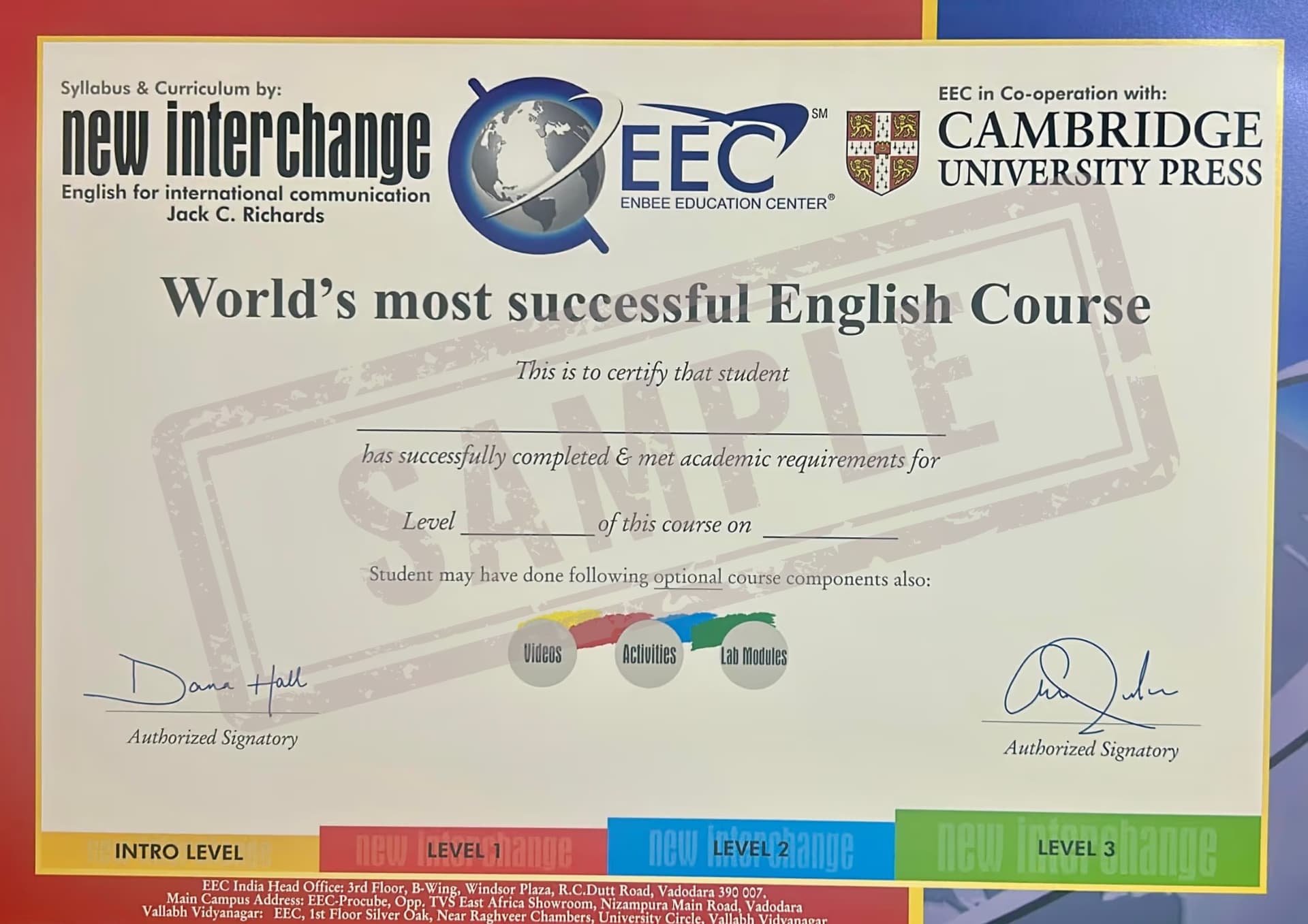
Every professional kitchen in the world runs on English. Orders, recipes, labels, communications with international guests—all in English. Official Cambridge UK certified English language learning ensures you're not just a great cook, but a chef who can work anywhere.
Why this matters for reading international recipes: A Gujarati medium student might know how to make dal. But can they read a French recipe that says "deglaze with a fond de veau, mount with butter, and pass through a chinois"? After our training, yes—fluently.
Culinary English You'll Master:
Kitchen Commands
"Behind you!" "Hot pan coming through!" "Fire table 5!" "All day, three steaks!"
Technical Terms
"Al dente," "bain-marie," "cartouche," "déglacer," "emulsion," "fond"
Menu Writing
How to describe dishes elegantly for fine-dining menus
Guest Interaction
Explaining dishes to international guests, handling allergies and preferences
👨🍳 Special Sessions: Visits by Real MasterChefs
Once a month, the kitchen transforms. Visits by real MasterChefs and industry experts bring the outside world into our training kitchen.
An Executive Chef from Marriott demonstrates knife techniques he learned in France. A Pastry Chef from Oberoi shares the secret to her signature chocolate soufflé. A cloud kitchen entrepreneur explains how he built a ₹50-lakh business with just 2 staff members.
These aren't lectures. They're live cooking sessions. You stand next to them, ask questions, and cook alongside legends. Many students receive internship offers directly from these sessions.
🏨 The 6+6 Model: From Kitchen to Career
Our 6+6 model—6 months training + 6 months internship in commercial kitchens/hotels—is designed for one thing: immediate employment.
First 6 Months: LEARN
- ✓ Knife skills & kitchen safety
- ✓ Indian & International cuisine
- ✓ Baking & Patisserie
- ✓ Plating & presentation
- ✓ Cambridge culinary English
- ✓ Food safety (HACCP, FSSAI)
Next 6 Months: EARN
- ✓ Paid internship in 5-star hotel kitchens
- ✓ ₹1,500 - ₹5,000/month stipend
- ✓ Free meals & accommodation
- ✓ Real-world kitchen experience
- ✓ Pre-Placement Offers (PPO)
- ✓ Industry certificate from Taj/Marriott
The Gujarat Paradigm: A 3-year hotel management degree costs ₹5-10 lakhs and delays your career by 3 years. Our 12-month program puts you in a professional kitchen within 6 months. By the time degree students graduate, you'll have 2 years of experience and possibly your own sous chef promotion.
🚢 Where Our Chefs Go: Hotels, Cruises & Beyond
Our culinary graduates don't just find jobs—they build careers. Here's where recent batches are now cooking:
Main Kitchen & Bakery
Multiple Outlets
Royal Caribbean, Costa
Hell's Kitchen, Atlantis
Starbucks, Dunkin'
Own Businesses
Vadodara & Ahmedabad
Events & Functions
From Home Kitchen to Professional Kitchen: Your Fire Awaits
Rohan, the boy from the Dahod dhaba? He now works at a 5-star hotel in Dubai. His family visited him last year—the first time his father had ever flown on a plane. They ate at his restaurant, and Rohan cooked their meal personally. His mother cried. Not from sadness, but from pride.
The culinary industry doesn't care where you come from. It only cares what you can create. If you can transform raw ingredients into art, if you can handle the heat and the pressure, if you can make people close their eyes in delight with a single bite—you belong in a professional kitchen.
That journey starts in Alkapuri, Vadodara—in our commercial kitchen, with real equipment, real trainers, and real fire.
Frequently Asked Questions: Culinary Arts Course
Answers to the most common questions from aspiring chefs and their families:
1. What is the difference between a culinary arts course and a chef course?
Culinary arts is a broader term encompassing all aspects of food preparation, presentation, and kitchen management. A chef course is typically part of culinary arts training. At Wings Institute, our Professional Certificate in Culinary Arts covers cooking techniques, bakery, confectionery, food service, and kitchen management—making you a complete culinary professional, not just a cook.
2. Can I open my own café or cloud kitchen after this course?
Absolutely! Our curriculum specifically covers menu planning, food costing, vendor management, kitchen hygiene (FSSAI compliance), and basic business operations. Many of our alumni have successfully launched cafés, cloud kitchens, and catering businesses across Vadodara, Ahmedabad, and other Gujarat cities. The rise of Swiggy and Zomato has made cloud kitchens a low-investment, high-return business opportunity.
3. What equipment will I train on at Wings Institute?
You'll train on industry-grade commercial kitchen equipment including: high-pressure gas burners (6-12 burner ranges), industrial convection ovens, salamanders, deep fryers, planetary mixers for bakery, proofing cabinets, commercial refrigeration units, stainless steel workstations, and professional knife sets. This ensures you're job-ready from day one—no adjustment period needed when you join a hotel kitchen.
4. Do you teach Indian cuisine including tandoor cooking?
Yes, Indian cuisine is a major module in our curriculum. You'll learn regional curries (Punjabi, South Indian, Gujarati, Mughlai), tandoor cooking on an actual tandoor oven, biryani preparation, Indian breads (naan, roti, paratha), and traditional desserts (gulab jamun, kheer, halwa). We also cover modern plating techniques for Indian dishes.
5. Is bakery and cake decoration included in the course?
Yes, our Bakery & Confectionery module covers bread making (white bread, whole wheat, focaccia), pastries (puff pastry, croissants), cakes (sponge, pound, chiffon), cake decoration (piping, fondant work, ganache), cookies, and desserts. You'll learn both egg-based and eggless variants to cater to all customer preferences.
6. What is the salary of a fresher chef in India?
Fresher chefs (Commis III) in India typically start at ₹12,000-18,000 per month in 3-star properties. In 5-star hotels like Taj, Oberoi, and Marriott, starting salaries range from ₹15,000-25,000 plus meals and accommodation. International hotels in Dubai, Qatar, and cruise ships offer ₹40,000-80,000 for experienced commis chefs. Executive Chefs can earn ₹1-3 Lakhs per month.
7. Why can't I learn cooking at home instead of joining a course?
Home cooking and professional cooking are completely different. Commercial kitchens use high-pressure gas burners that generate 10x more heat than home stoves, industrial equipment, standardised recipes for consistency, HACCP food safety protocols, and volume cooking techniques. Training on home equipment will leave you unprepared for the speed, precision, and hygiene standards of professional kitchens.
8. Do I need to know English to become a chef?
While kitchen terminology is often in French/English, you don't need fluent English to start. However, for career growth—especially in 5-star hotels or international positions—English communication is essential. Our Cambridge Spoken English module transforms vernacular students into confident English speakers, covering hospitality vocabulary and kitchen terminology.
9. What are cloud kitchens and why are they popular in Gujarat?
Cloud kitchens (also called ghost kitchens) are delivery-only restaurants without dine-in facilities. They operate through Swiggy, Zomato, and direct delivery. Gujarat's growing food delivery market, lower rental costs, and entrepreneurial culture make cloud kitchens a lucrative opportunity. You can start a cloud kitchen with ₹5-10 Lakhs investment—far less than a traditional restaurant.
10. Can I work on cruise ships after this culinary course?
Yes! Cruise lines actively recruit trained chefs for their onboard restaurants. Cruise chef salaries range from ₹60,000-1,50,000 per month (tax-free) with free food and accommodation. However, most cruise companies require 1-2 years of land-based hotel experience first. Our 6-month internship in 5-star hotels helps you build this experience.
Voice Search FAQs (Gujlish/Hinglish)
11. Chef banne ke liye kya karna padta hai?
Chef banne mate: 1) Professional culinary course karo (Wings Institute ma 12 months), 2) Commercial kitchen ma practical training lo, 3) 6 months hotel internship complete karo, 4) Commis III level thi start karo, 5) Experience thi promotion malo. Home cooking thi professional chef nai bani shakay - industrial kitchen training jruri che!
12. Cooking course fees ketli che Vadodara ma?
Wings Institute ma Culinary course ₹84,000 che (approximately). 6 months classroom training + 6 months paid internship include che. Commercial kitchen access, bakery training, knife skills, all ingredients - badhu fees ma include. EMI option available. Internship ma ₹1,500-5,000 stipend male - partially course fee recover!
13. Chef ki salary kitni hoti hai India mein?
Fresher chef (Commis III): ₹12,000-18,000/month. 5-star hotels (Taj, Oberoi): ₹15,000-25,000 + meals. 3-5 years experience: ₹35,000-50,000. Sous Chef: ₹60,000-80,000. Executive Chef: ₹1-3 Lakh. Cruise ships: ₹60,000-1,50,000 tax-free! Dubai/Singapore better packages aape.
14. Ghar par cooking shikhine chef bani shakay ke nai?
NAHI! Home cooking ane professional cooking bilkul alag che. Commercial kitchen ma 10x vadhare heat hoy, industrial equipment, standard recipes, HACCP food safety, volume cooking - aa badhu ghar par nathi shikhatu. Home training thi hotel kitchen ma survive j nathi kari shakay - speed, precision, hygiene standards match nai thay.
15. Potanu cafe ya cloud kitchen kholvu che - course help karase?
100% karase! Wings curriculum ma specifically: menu planning, food costing, FSSAI compliance, vendor management, business operations shikhvaay. Alumni Vadodara, Ahmedabad ma successful cafes, cloud kitchens, catering businesses chalaye che. Swiggy/Zomato era ma cloud kitchen ₹5-10 Lakh investment thi start thai shake!
16. Bakery ane cake decoration shikhvaay che ke nai?
Haan! Full Bakery & Confectionery module che: Bread making (white, whole wheat, focaccia), pastries (puff, croissants), cakes (sponge, pound, chiffon), cake decoration (piping, fondant, ganache), cookies, desserts. Egg-based ane eggless banne variants shikhvaay - Jain/vegetarian customers mate important!
17. Cruise ship ma chef ki job kaise milti hai?
Cruise chef jobs mate: 1) Professional culinary training (Wings course), 2) 1-2 years 5-star hotel experience, 3) Swimming basic aavdvu jruri, 4) Medical fitness, 5) Passport. Wings Institute 6 months internship aa experience build kare. Cruise salary: ₹60,000-1,50,000 tax-free + free food, accommodation, travel!
18. Indian cuisine ane tandoor cooking shikhvaay che?
Haan! Major module che: Regional curries (Punjabi, South Indian, Gujarati, Mughlai), tandoor cooking on REAL tandoor oven, biryani, Indian breads (naan, roti, paratha), traditional desserts (gulab jamun, kheer, halwa). Modern plating techniques pan shikhvaay Indian dishes mate. Wings kitchen ma actual tandoor che!
19. Cloud kitchen su che? Gujarat ma kyun popular che?
Cloud kitchen = delivery-only restaurant, no dine-in. Swiggy/Zomato par operate karo. Gujarat ma popular kyun: 1) Growing food delivery market, 2) Lower rental costs (no dining area), 3) Gujarati entrepreneurial culture, 4) ₹5-10 Lakh thi start - traditional restaurant thi bahut cheaper! Wings ma business operations pan shikhvaay.
20. Culinary course duration ketlo che?
Wings Institute ma Culinary course 12 months total: 6 months intensive classroom + practical training, then 6 months paid internship at Taj/Marriott/ITC. Part-time basis - daily 4 hours. Indian, Continental, Bakery, Kitchen Management badhu cover thay. Course complete - directly chef job ready!

Ready to Start Your Culinary Journey?
Visit our commercial kitchen at the Alkapuri campus. See the equipment, meet the faculty, and taste what professional training feels like.