

Is a Cruise Ship Career Worth It for Indians? Honest Pros & Cons 2026

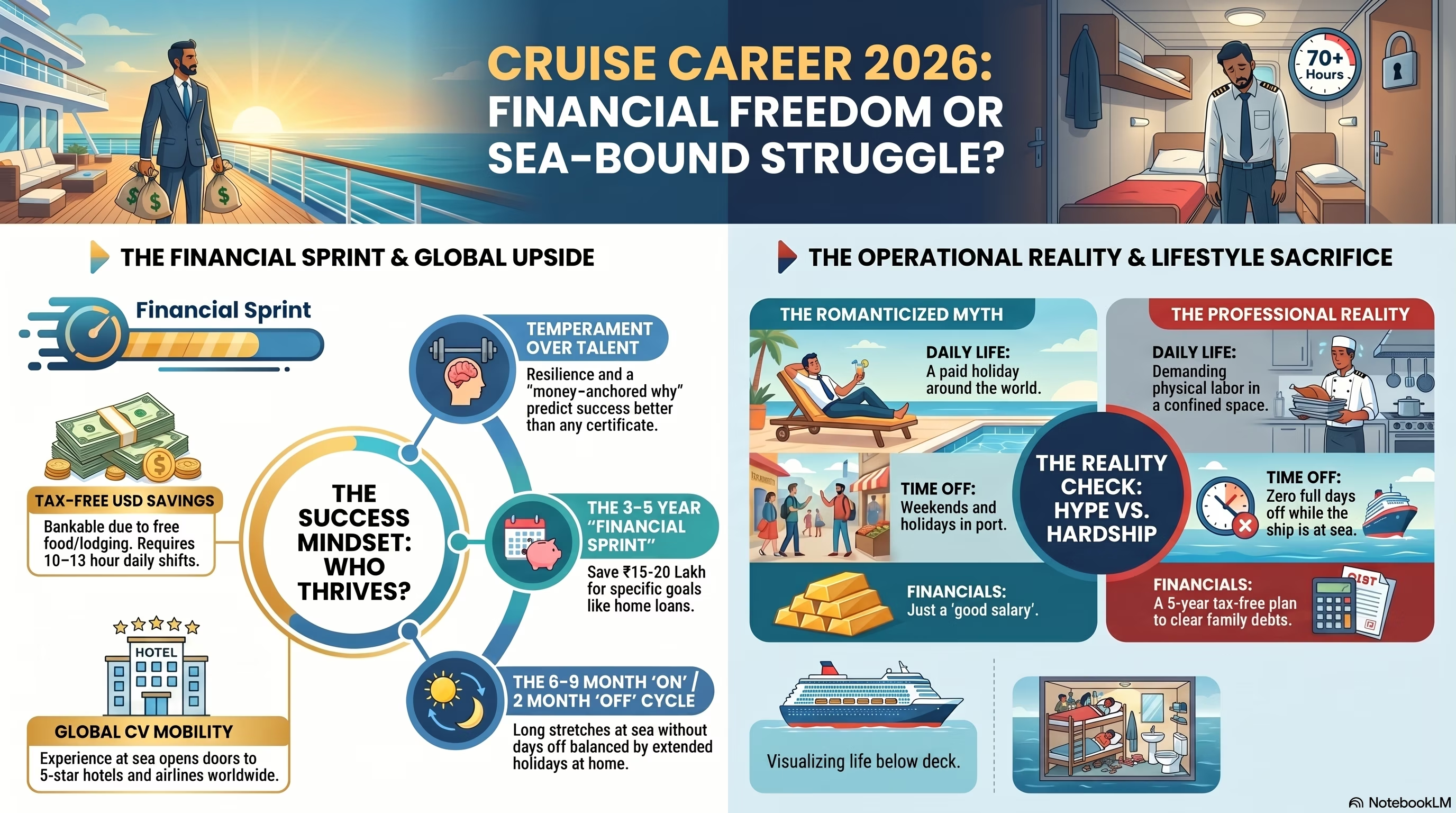
"Behind every dollar-salary reel is a 70-hour week, a shared cabin and months away from home. So is working on a cruise ship actually worth it for an Indian? Here is the honest, unglamorous answer — the real daily life at sea alongside the genuine financial upside — so you can decide with open eyes, not hype."
"Sir, honestly — is it worth it? Should I really go work on a ship?" After eighteen years of training Gujarat students, this is the question that comes up once the salary excitement settles and reality sinks in. And it deserves an honest answer, not a sales pitch. The truth is that working on a cruise ship is worth it for some Indians and genuinely not worth it for others — and the difference is rarely about the money. It is about temperament, expectations and why you are doing it. This guide lays out both sides without flinching: the hard daily realities of cruise ship life that brochures hide, and the very real upside that changes families. If you are still mapping out the basics, our international cruise line training program pillar page covers the full pathway, and our how to get a cruise ship job after 12th guide walks the step-by-step route.
The honest pros and cons at a glance
Before we go deep, here is the balanced picture in one table. Read both columns fully — too many aspirants read only the left and too many parents read only the right.
| The upside (why it can be worth it) | The reality (why it is hard) |
|---|---|
| Tax-free USD income for qualifying NRI seafarers | 6-9 month contracts away from home and family |
| Free cabin, meals and usually joining/return flights | You share a small cabin, often with a stranger |
| High net savings vs a comparable shore job | No full days off while the ship is at sea |
| Travel to multiple countries on the company's clock | Long days, often split shifts, 7 days a week onboard |
| Global hospitality CV that opens doors worldwide | Homesickness, isolation and real mental-health strain |
| Family financial lift — many fund homes, siblings' education | Limited, expensive internet; you miss events back home |
| Clear promotion ladders in F&B, bar and housekeeping | It is physical, repetitive work, not a holiday |
“It's A best Training Institute”
The shared cabin: your home is the size of a bathroom
Let us start with the thing nobody posts on Instagram. As entry-level crew you do not get a guest stateroom — you live below the waterline in a crew cabin, typically shared with one other crew member, with bunk beds, a tiny shared bathroom and barely enough space to turn around. Your cabin-mate may be from a different country, on a different shift, snoring while you sleep. There is no privacy in the way you are used to at home. Most crew adapt within a few weeks and many form lifelong friendships with their cabin-mates — but if the idea of zero personal space for months genuinely distresses you, be honest with yourself now.
6 to 9 month contracts: you commit for the long haul
Cruise contracts for Indian hospitality crew typically run between six and nine months, sometimes longer. Once you sign and join, you are on that ship for the full contract — you cannot pop home for a wedding or a festival. This is the single hardest adjustment for most Indian families, who are used to seeing each other often. You will miss Diwali, birthdays, and possibly emergencies. The flip side is structure: you know exactly how long you are away and exactly when you come home, which makes financial planning very clean.
No days off at sea — and split shifts are normal
Here is a reality that shocks newcomers: while the ship is sailing between ports, there are no days off. The hotel never closes because guests are onboard 24/7. You work every day of your contract, often 10 to 13 hours, frequently in split shifts — a morning block, a long midday break, then an evening block. In tipped F&B and bar roles the hours cluster around meal and peak service times. The work is physical and repetitive. On port days you may get a few hours ashore if your shift allows, and that is when the travel magic happens — but never assume a port day is a guaranteed day out.
"Working on a cruise ship is basically getting paid to go on a holiday around the world."
It is the opposite of a holiday — it is one of the most demanding hospitality jobs in the world. You serve the guests who ARE on holiday, every day, with no weekend, in a confined space, for months. The travel is real but it happens in stolen hours between long shifts. People who join expecting a vacation are precisely the ones who break their contract early and come home disillusioned. Join for the savings and the career, and treat the travel as a bonus.
The 2-month break: how the on/off rhythm actually works
Here is the part that balances the hard contract length. The cruise career runs on a cycle: you work a contract of, say, six to nine months, then you get an extended paid-style break of roughly two months back home before your next contract. Unlike a normal job with a fortnight of annual leave, you return home for a genuine long stretch — enough to be fully present for family, festivals and rest — and then go back to earning. Over a few years this rhythm means real chunks of home time that a regular 9-to-6 job never gives you. Many crew plan weddings, home construction or family time around these breaks. Verify the exact on/off pattern in your specific contract, as it varies by line and role.
Homesickness and mental health: the part nobody trains you for
This deserves real honesty. Being far from home for months, working every day in a confined floating community, can be emotionally heavy — especially in your first contract. Homesickness is normal. Internet is limited and expensive at sea, so daily video calls home are not always possible. Some crew struggle with isolation, the relentless pace, or being away during a family difficulty they cannot fly home for. The crew who cope best stay connected through ship friendships, keep a routine, use the gym and crew areas, and remember their financial WHY on hard days. If you already struggle significantly with anxiety or low mood, factor that in seriously — the sea does not make those things easier.
What makes people thrive versus quit
After watching many students go to sea, the pattern is clear. It is not the strongest or the most qualified who last — it is a specific temperament.
"I'll go for a year, see the world, escape my problems, and figure out the rest later — it can't be that hard if everyone's posting reels."
"I'm going for a defined goal — save ₹15-20 lakh in three years to clear our home loan and fund my sister's education — I'll respect the discipline, ride out the homesickness, and treat it as a serious career chapter."
Are you suited to cruise ship life? An honest self-check
- You have a specific financial goal a few years of cruise savings would achieve
- You can handle months away from family without it derailing you
- You are comfortable with shared space and zero privacy for long stretches
- You can stay disciplined and positive through long, repetitive shifts
- You are emotionally steady and have ways to cope with homesickness
- You genuinely enjoy hospitality and serving people, not just the salary
- You will save and invest the money, not spend the windfall in port shops
- You see this as a 3-5 year career chapter with a plan, not a permanent escape
Now the upside — why it genuinely can be worth it
Having been brutally honest about the cost, let us be equally honest about the reward, because for the right person it is life-changing. The income is typically USD-denominated and, for Indian seafarers meeting NRI day-count conditions, generally tax-free. Your cabin, all your meals and usually your flights are covered, so your living costs onboard are minimal — meaning a large share of your pay is genuinely bankable. That is the real comparison: not gross salary, but savings. For grounded numbers by department, read our cruise ship salary guide instead of trusting reel hype.
Travel, global career and the family financial lift
Beyond money, you build an international hospitality CV that is respected worldwide — many ex-cruise crew move into five-star hotels, airlines, or shore-side cruise roles afterwards. You see countries you would otherwise never visit, on the company's clock. And the most meaningful part, the one I see again and again: the family lift. Crew from ordinary Gujarat backgrounds use a few contracts to clear home loans, build or renovate a family home, fund a sibling's education, or seed a business. Done with discipline, three to five years at sea can reset a family's entire financial trajectory in a way few land jobs can for a fresher.
Expert Insight
"The healthiest way to approach a cruise career is as a deliberate 3-5 year financial sprint with a clear goal and a planned next step — clear a loan, build a home, save a corpus, then transition to a shore role or your own venture. The crew who burn out are the ones with no end point. Decide your target number and your exit before you board, and the hard months become purposeful instead of endless."
Where Wings Institute honestly fits
Let me be completely transparent, because your trust matters more than a quick admission. Wings Institute, training Vadodara students since 2008 with 5,000+ alumni and a 4.8-star rating across 333 reviews, is a hospitality career-readiness academy. We prepare you for the parts that decide whether you survive and thrive at sea — F&B and housekeeping skills, grooming, confident spoken English, and interview craft. What we do NOT do, and will never falsely claim: we do not issue STCW certificates, we do not issue CDC or INDoS, we have no RPSL manning-agency tie-up that 'places' you on a ship, and we guarantee no job and no salary. Those are DG Shipping-regulated and agency-controlled by design. Any institute promising a 'guaranteed cruise job' is misleading you — and that honesty is exactly the mindset that helps you decide if this career is worth it for you.
So — is a cruise ship career worth it for Indians? My honest answer, as I would give my own student: yes, if you go for the right reasons, with realistic expectations and financial discipline; and no, if you are chasing an escape or a holiday. The shared cabin, the long contracts, the no-days-off grind and the homesickness are real and they are not for everyone. But the tax-free savings, the travel, the global career and the family lift are equally real for those who endure. Decide with open eyes. If after reading both columns honestly you still want it, build your readiness properly — and walk in knowing exactly what you are signing up for.
“I love the practical training that Wings Institute gives to us. Wings has a real looking Airplane model and a real looking fine dine restaurant setup. We get lots of practical training which is so important for us. Thank you Wings”

Amulakh Trivedi
Verified Google ReviewFrequently Asked Questions
Is working on a cruise ship worth it for Indians?
How long are cruise ship contracts and do you get days off?
What is cruise ship life actually like day to day?
How do people cope with homesickness on a cruise ship?
Who thrives on a cruise ship and who quits early?
Can you really save a lot of money working on a cruise ship?
Does Wings Institute guarantee a cruise ship job or issue STCW and CDC?
“Joining Wings Institute was the best decision I ever made! The environment is so positive and encouraging. The faculty gives individual attention to every student and helps polish our personality, grooming, and interview skills. Truly the best aviation and cabin crew institute in Gujarat.”
Explore Cruise Line Training
Don't just read about it. Experience it. Use our AI tools to assess your current standing for free.
Action Now