

Cruise vs Merchant Navy After 12th: Which Career Path (India 2026)

"Every week a student walks into our Vadodara campus and says 'Sir, I want to go on ships' — and within two minutes it's clear they're using 'cruise line' and 'merchant navy' as if they're the same job. They are not. They are two completely different careers, with different eligibility, different training, different pay and a completely different daily life. Choosing the wrong one wastes years and lakhs. This is the honest, India-specific comparison nobody sits you down and explains."
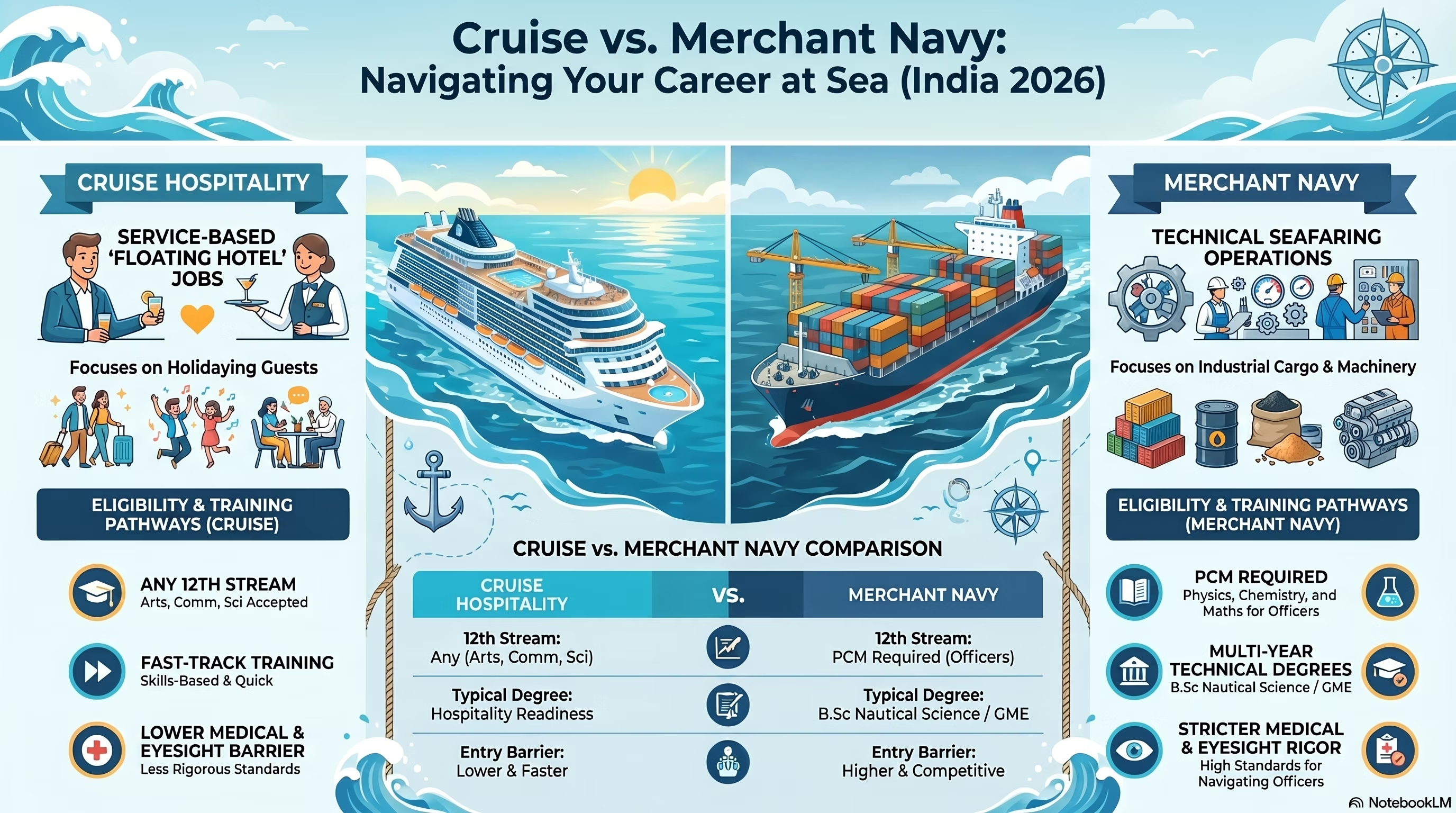
Here is the cleanest way to settle the confusion in one breath: a cruise ship is a floating five-star hotel where you do hospitality work, and the merchant navy is a fleet of cargo vessels where you do technical seafaring work. Both float, both pay in dollars, both keep you away from home for months — but the jobs, the eligibility and the training have almost nothing in common. A cruise waiter or cabin steward serves international guests; a merchant navy deck or engine officer navigates and runs a cargo ship across oceans with no passengers at all. Mixing these two up is the most expensive mistake an Indian 12th-pass student makes about a career at sea, so let's draw the line clearly before you spend a rupee. If you're brand new to all of this, start with our pillar overview of international cruise line training.
The one-line difference most students miss
Cruise line hospitality = service jobs on a passenger ship (the hotel side): waiters, bartenders, cabin stewards, galley assistants, receptionists, retail and spa staff. Merchant navy = technical operation of cargo and commercial ships: deck officers who navigate, engine officers who run the machinery, and ratings who support them. The cruise crew member's customer is a holidaying guest; the merchant navy officer's 'customer' is the cargo and the voyage itself. One is fundamentally a hospitality career that happens to be at sea; the other is fundamentally a maritime engineering and navigation career. Wings prepares you for the first, not the second — and we'll be transparent about that throughout this guide.
"Cruise line and merchant navy are basically the same thing — they're both 'ship jobs', so any ship course will get me onto any ship."
No. They are different industries with different employers, different eligibility and different training. A merchant navy officer course (like B.Sc Nautical Science or a Marine Engineering / GME programme) will not qualify you for — or even aim at — a cruise hospitality role, and a cruise hospitality readiness programme will not make you a merchant navy officer. The only thing they genuinely share is the maritime safety baseline: every seafarer on either path needs STCW basic safety training, an INDoS number and a CDC. Beyond that shared paperwork, they diverge completely.
“It's very amazing and gorgeous Institute for Aviation & Airport management”
Eligibility: where the two paths split hardest
This is where most students get filtered out without realising it. Merchant navy officer tracks are academically gated: the classic deck-officer route (B.Sc Nautical Science / DNS) and the marine-engineering route typically require 12th with Physics, Chemistry and Maths (PCM), a minimum aggregate, and often an entrance test, plus a notably strict medical — eyesight standards for navigating officers are tighter than for most other jobs. Cruise hospitality, by contrast, is stream-agnostic: a 12th pass from Arts, Commerce or Science is accepted, because the skill that matters is service, grooming and English, not calculus. For the full cruise-side checklist — age, stream, BMI, English — read our dedicated guide on cruise ship jobs eligibility in India.
| Factor | Cruise line (hospitality crew) | Merchant navy (nautical / engine) |
|---|---|---|
| What the job is | Service work on a passenger ship — F&B, housekeeping, galley, guest services, bar, spa, retail | Technical operation of cargo/commercial ships — navigation (deck), machinery (engine), and supporting ratings |
| Type of vessel | Cruise ships (floating hotels carrying holiday guests) | Cargo ships, tankers, bulk carriers, container vessels (no passengers) |
| 12th stream needed | Any stream — Arts, Commerce or Science (12th pass) | Officer tracks usually need PCM (Physics, Chemistry, Maths); ratings less strict |
| Typical training pathway | Hospitality / cruise readiness programme + STCW + CDC | B.Sc Nautical Science / DNS (deck), Marine Engineering / GME (engine), or GP Rating — at IMU / DG-approved colleges |
| Medical / eyesight | Seafarer medical (PEME); healthy BMI; service-grade vision usually fine | Stricter seafarer medical; navigating-officer eyesight standards are tight |
| Entry barrier after 12th | Lower and faster — open to all streams | Higher and more competitive — PCM, entrance, limited seats |
| Pay shape | USD pay + tips; strong savings from covered living + tax-free (NRI rules) | USD pay; senior officer ranks can earn very high, but the climb is longer |
| Daily life | Guest-facing, social, hospitality-paced; long contracts | Technical watches, isolated cargo runs, fewer people, long contracts |
| What Wings trains for | YES — this is our lane (cruise hospitality readiness) | NO — we do not run merchant-navy officer courses |
Training pathways are not interchangeable
Because the jobs differ, the training differs — and you cannot substitute one for the other. The merchant navy officer route runs through DG Shipping / Indian Maritime University (IMU)-approved colleges: B.Sc Nautical Science or a Diploma in Nautical Science (DNS) for aspiring deck officers, Marine Engineering degrees or a Graduate Marine Engineering (GME) course for engine officers, and GP Rating programmes for the ratings entry. These are multi-year, technical, exam-heavy pathways. The cruise hospitality route is shorter and skills-based: a recognised hospitality / cruise readiness programme that builds F&B service, housekeeping, grooming, spoken English and interview craft, followed by the statutory marine documents (STCW, INDoS, CDC) and an RPSL-licensed manning agency. For the document side in depth, see our STCW and CDC guide, and for the step-by-step joining route, our how to get a cruise ship job after 12th hub.
Common merchant navy entry pathways after 12th (PCM-gated)
- 1B.Sc Nautical Science / DNS (Diploma in Nautical Science) — the deck-officer (navigation) route.
- 2Marine Engineering degree or Graduate Marine Engineering (GME) — the engine-officer route.
- 3ETO (Electro-Technical Officer) courses — for the electrical side of ship machinery.
- 4GP Rating (General Purpose Rating) — the ratings (non-officer) entry, with lower academic bars than officer tracks.
- 5All of the above run through DG Shipping / IMU-approved institutes — Wings does NOT offer any of them.
Pay and lifestyle: an honest comparison, not a winner
There is no clean 'X pays more' answer, and anyone who gives you one is selling something. At entry level, cruise hospitality can be very attractive because of the savings maths — covered cabin and meals, often-covered flights, tip upside in front-of-house roles, and tax-free income for seafarers who meet NRI day-count rules. Over a full career, a senior merchant navy officer (Chief Officer, Captain, Chief Engineer) can reach pay levels that exceed most cruise hospitality roles — but that ceiling sits at the top of a long, competitive, PCM-gated climb, not at entry. Lifestyle differs just as sharply: cruise life is social and guest-facing on a vessel full of holidaymakers; merchant navy life is technical and comparatively isolated on a cargo ship with a small crew and no passengers. Pick the daily reality you'd actually thrive in, not just the salary screenshot. For grounded cruise numbers, read our cruise ship salary guide rather than reel hype.
Decide honestly: which path fits you?
- I enjoy serving and interacting with people all day → leans cruise hospitality.
- I love physics/maths and technical systems more than guest service → leans merchant navy.
- I did NOT take PCM in 12th → merchant navy officer tracks are likely closed; cruise hospitality stays open.
- I want the lowest-barrier, fastest entry after 12th → cruise hospitality is usually quicker.
- I'm willing to do a multi-year technical degree (B.Sc Nautical / GME) for a higher long-term ceiling → merchant navy.
- My eyesight/medical may not meet strict navigating-officer standards → verify before committing to merchant navy.
- I want a social, hospitality-paced environment over isolated cargo runs → cruise hospitality.
- I understand Wings trains for the cruise hospitality side only, not merchant navy officer courses.
Expert Insight
"Some 'maritime career' offices deliberately keep the cruise-vs-merchant-navy distinction fuzzy so they can sell you whatever course they have a seat in. Before you enrol anywhere, make them state plainly: is this a merchant navy officer/rating course (deck/engine) or a cruise hospitality readiness programme? Ask which DG Shipping / IMU approvals apply, and remember that no honest institute — including Wings — issues your STCW or CDC itself or guarantees a job. Clarity on which career you're buying into is the cheapest insurance you'll ever get."
Where Wings Institute fits — stated plainly
Let me draw the boundary exactly, because your years and your family's money are on the line. Wings Institute, training Vadodara students since 2008 with 5,000+ alumni and a 4.8-star rating across 333 reviews, prepares you for the cruise HOSPITALITY side — the service standards, food and beverage, housekeeping, grooming, spoken English and interview confidence that make an RPSL recruiter say yes to a cruise line. What we do NOT do, and will never pretend to: we do not run merchant navy officer or marine-engineering courses (no B.Sc Nautical Science, no DNS, no GME, no GP Rating); we do not issue STCW certificates or your CDC/INDoS; we have no RPSL manning-agency tie-up; and we do not guarantee jobs. If your heart is set on becoming a navigating or engine officer, you belong at a DG Shipping / IMU-approved maritime college, not here — and we'll tell you so honestly rather than enrol you into the wrong dream.
So, cruise vs merchant navy after 12th? The honest answer is: they are different careers, and the right one depends on you — your stream, your aptitude, your medical, and the daily life you actually want. If you took PCM, love technical systems and want the long-haul officer climb, the merchant navy route through an IMU-approved college is yours to chase. If you're a people person from any stream who wants a faster, hospitality-driven path to earning in dollars on a guest-facing ship, the cruise hospitality route — the one Wings genuinely prepares you for — fits better. Choose with eyes open, verify every requirement against official sources, and treat anyone who blurs these two careers together with healthy suspicion.
“Wonderful experience... Good teaches.... Osmmmm wings institute... 😍😍”

Lala Thakkar
Verified Google ReviewFrequently Asked Questions
What is the difference between cruise line and merchant navy jobs?
Which is better after 12th, cruise line or merchant navy?
Can I join the merchant navy without Physics, Chemistry and Maths (PCM)?
Does Wings Institute offer merchant navy courses?
Do cruise and merchant navy jobs need the same documents?
Is the salary higher in cruise line or merchant navy?
Can a girl choose either cruise line or merchant navy after 12th?
“Joining Wings Institute was the best decision I ever made! The environment is so positive and encouraging. The faculty gives individual attention to every student and helps polish our personality, grooming, and interview skills. Truly the best aviation and cabin crew institute in Gujarat.”
Explore Cruise Line Training
Don't just read about it. Experience it. Use our AI tools to assess your current standing for free.
Action Now