

Cruise Ship Chef Career After 12th: KOT-to-Galley Pathway India

"You have just finished 12th, you love to cook, and somewhere a reel showed a chef plating dishes on a sun-deck while the ship docks in Italy. So how do you actually become a chef on a cruise ship from India? Here is the honest part most coaching ads skip: almost nobody walks straight from a culinary classroom into a cruise galley. There is a real ladder — culinary training, then one to two years in a land hotel kitchen, then the statutory marine documents, then a commis posting at sea, and only later the CDP, sous and executive-chef grades. This guide maps that KOT-to-galley pathway step by step, with realistic timelines and the roles-and-pay picture, so you build a chef career instead of chasing a shortcut."
Every few weeks a 12th-pass student who loves cooking sits across from me in Vadodara and asks the same hopeful question: 'Sir, I want to be a chef on a cruise ship — which course do I join to get straight onto the ship?' I understand the dream, and it is a genuinely good one — cruise galleys pay in dollars, the savings are real, and you wake up in a new country. But the honest answer is that 'which course gets me straight on?' is the wrong question, because there is no single course that lands a fresher directly into a cruise galley. Becoming a cruise chef is a pathway with several rungs, and the people who succeed respect the order of those rungs. This guide is purely about that pathway — how you actually get from 12th to a cruise galley over a few years. For what the job itself is like once you're there — the volume cooking, the hygiene standards, the long galley shifts — read our companion piece on cruise ship kitchen and galley life; this post is the route to get there. If you're new to the whole industry, start with our international cruise line training program pillar.
The honest truth: a cruise galley is not where you learn to cook
Here is the single most important thing to understand before you plan anything. A cruise ship galley produces thousands of covers a day under intense time pressure, in a confined, hygiene-regulated environment — it is one of the most demanding kitchens in the world. Cruise lines and the agencies that hire galley staff therefore almost always want you to have already learned your fundamentals on land before you board. In practice that means a culinary qualification PLUS typically one to two years of real kitchen experience in a hotel or busy restaurant — ideally a 5-star or large-volume kitchen — so you can hold a station, read a KOT (Kitchen Order Ticket) under pressure, work clean, and keep pace. The galley is where you apply skills you already have, not where you discover them. Any plan that skips the land-experience rung is fighting the way the industry actually hires.
"I'll just do a short cruise-chef course after 12th and join a cruise ship galley directly as a chef — no need to waste years in a hotel kitchen first."
This is the costliest misconception in cruise culinary hiring. A short course alone almost never places a fresher straight into a cruise galley as a 'chef'. Cruise lines and their galley recruiters typically expect a culinary foundation plus one to two years of hands-on land kitchen experience, because the galley is high-volume and high-pressure and assumes you already have your basics. Even when you do join, you enter at the bottom rung — as a commis (junior cook) — not as a chef de partie or sous chef. The land-hotel years are not 'wasted time'; they are the exact experience that makes a recruiter say yes and protects you from drowning on your first contract. Build the experience, then go to sea.
“I had wonderful time study with perfectional tutor and instructar so glad to be a part of this institution so Genenrally it was the best experience in my life Bcz it helped sharpen my skills thank you for tutor”
The KOT-to-galley career ladder, step by step
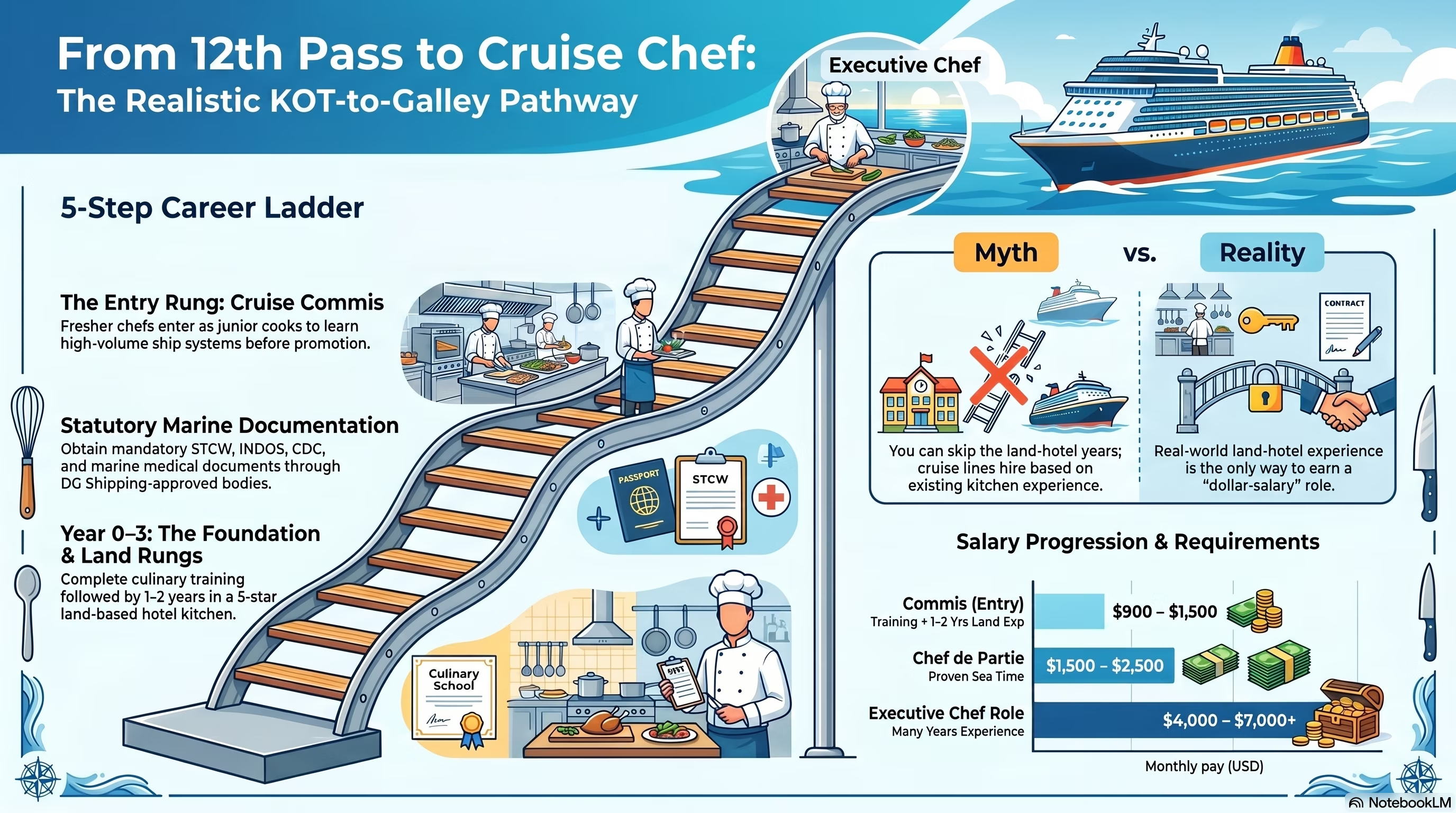
Think of it as a ladder where each rung earns the next. You do not skip rungs; you climb them. Below is the realistic sequence from a 12th-pass culinary aspirant to an executive chef at sea, with honest timelines. The years are indicative and depend on your performance, the line and the openings available — treat them as a planning guide, not a promise.
Culinary training (the foundation)
Build core culinary and kitchen-readiness skills after 12th — knife work, basic cuisines, food safety and hygiene, kitchen discipline, plus the spoken English and grooming a cruise recruiter screens for. This is the foundation Wings helps you build; it is not, by itself, a cruise job.
Land 5-star / hotel kitchen experience (the rung most people skip)
Work 1–2 years (often more) in a real hotel or high-volume restaurant kitchen on land. Learn to hold a station, run KOTs under pressure, work to hygiene standards and keep pace at volume. This experience is what cruise galley recruiters actually look for — it is the difference-maker, not an optional extra.
Statutory marine documents (STCW / INDoS / CDC / medical)
Obtain STCW basic safety training, an INDoS number, your CDC (Continuous Discharge Certificate) and a marine medical — all from DG Shipping-approved bodies, separately, on a fixed official process. No culinary course or institute (Wings included) issues these for you.
Cruise commis (junior cook) — your entry rung at sea
Join the galley as a commis: the junior cook who supports a station, preps, and learns the ship's systems and volume. This is the normal entry role for a culinary fresher at sea, hired through an RPSL-licensed manning agency — not a 'head chef' posting.
Chef de Partie (CDP) — running your own station
After proving yourself as a commis across contracts, you climb to Chef de Partie, owning a section of the galley (e.g. sauce, larder, pastry) and supervising commis under you. This is a genuine promotion earned by performance, not a starting grade.
Sous Chef — second-in-command
With more experience and demonstrated leadership, you move toward Sous Chef, deputising for the executive chef, coordinating sections and managing the galley team's output. Years of sea time and consistency get you here.
Executive Chef — the top of the galley
The executive chef runs the entire galley operation, menus, teams and standards across the ship. This is a long-term destination reached over many years and contracts — the top of the ladder, not a place a fresher starts.
What each rung pays and what it needs
Pay at sea is driven by role, line and contract, and galley grades are typically salaried rather than tip-led (unlike front-of-house F&B). The figures below are broad, indicative USD ranges to show the SHAPE of the ladder — they vary widely by cruise line, ship and your experience, so verify current numbers with the actual employer or agency and never treat any single figure as guaranteed. For the wider department-by-department picture, see our cruise ship salary guide for India 2026.
| Galley role | Where it sits | What it typically needs | Indicative monthly pay (USD) |
|---|---|---|---|
| Commis / Junior Cook | Entry rung at sea | Culinary foundation + ~1-2 yrs land kitchen experience + STCW/CDC | $900 – $1,500 |
| Chef de Partie (CDP) | Station-in-charge | Proven commis sea time; can run a section solo | $1,500 – $2,500 |
| Sous Chef | Second-in-command | Several years' experience + leadership; deputises for exec | $2,500 – $4,000 |
| Executive Chef | Top of the galley | Many years' experience; runs the whole galley operation | $4,000 – $7,000+ |
Notice the shape of that table: the entry rung is a commis on a modest-but-bankable salary, and the higher numbers belong to roles you climb into over years. That is the honest economics of a cruise culinary career — the big figures in the reels are usually senior grades, not where you start. Your first contract's real value is the savings (covered cabin, meals and usually flights mean a large share of pay is bankable) plus the sea time that unlocks the next promotion.
How a commis posting compares to where freshers usually start
It's worth being clear about how the culinary entry rung differs from the broader 'no-experience' cruise entry roles, because students often confuse them.
"I'll skip the boring land-hotel years, do a quick course, and apply directly for a Chef de Partie or sous chef job on a cruise ship straight after 12th — why start at the bottom?"
"I'll build my culinary basics, put in 1-2 years in a real hotel kitchen to earn genuine experience, get my STCW and CDC, then join as a commis and climb to CDP and sous from there over a few contracts."
If you have zero experience right now: your realistic first move
If you're a 12th-pass student with no kitchen experience yet, don't be discouraged — you're simply at the start of the ladder, which is exactly where you should be. Your realistic first moves are: build a genuine culinary foundation, then get into a land hotel or restaurant kitchen to earn that crucial 1-2 years. Some aspirants who want to start earning at sea sooner also consider entering through other no-experience-friendly cruise roles first (galley utility/steward, housekeeping) to get onboard, build sea time and then move toward a cook role internally over time. To understand which cruise roles genuinely take freshers with no experience versus which expect hotel experience first, read our guide on cruise ship entry roles for freshers in India. Whichever route you choose, the culinary ladder above still rewards real cooking experience — there's no avoiding the kitchen reps.
Your cruise-chef pathway readiness checklist
- I understand a cruise galley is for applying skills, not learning the basics — and that recruiters expect 1-2 years of land kitchen experience first.
- I'm building (or have built) a genuine culinary foundation: technique, food safety, hygiene, kitchen discipline.
- I have a plan to gain 1-2 years of real hotel/restaurant kitchen experience on land before applying to cruise lines.
- I know I'll enter at sea as a commis (junior cook), not as a CDP, sous or executive chef.
- I've budgeted the statutory documents (STCW, INDoS, CDC, marine medical) from DG Shipping-approved bodies, separately from any course.
- I understand cruise galley hiring runs through RPSL-licensed agencies and the cruise lines — never through a 'guaranteed placement' course fee.
- I've read the galley-life guide so I know what the job is actually like before I commit.
- I'm planning this as a 4-6 year build (foundation → land experience → documents → sea time → promotions), not a 3-month shortcut.
Expert Insight
"The most common mistake culinary aspirants make is treating the 1-2 years in a land kitchen as a delay to rush past. It is the opposite — it is the single highest-return investment in your cruise-chef career. Those years are where you earn the speed, the station discipline and the hygiene habits that make you employable at sea and that keep you afloat on a brutal first contract. A candidate with real hotel kitchen experience and clean basics gets picked over a candidate with only a certificate, almost every time. So choose a busy, high-volume kitchen, work hard, and let that experience become the thing that opens the galley door for you."
Where Wings Institute honestly fits
Let me state the boundary plainly, because your years and your family's money depend on clarity. Wings Institute, training Vadodara students since 2008, is a culinary and hospitality career-readiness academy — not a maritime certifying body and not a manning agency. On the cruise-chef pathway, our genuine role is at the foundation rung: building your core culinary skills, kitchen discipline, food-safety awareness, grooming and the spoken English a recruiter screens for, so you are ready to earn that crucial land-kitchen experience and, in time, present well to cruise galley recruiters. Here is what we do NOT do, stated so no one can mislead you: we do NOT issue STCW certificates or CDC/INDoS, we have NO RPSL manning-agency tie-up that 'places' you in a galley, and we do NOT guarantee jobs or a salary. Those documents come from DG Shipping-approved bodies, and hiring rests with the cruise lines and their licensed agencies. We help you build the foundation honestly and point you cleanly to the official channels — and we'll never sell you a 'guaranteed cruise chef job' shortcut, because it doesn't exist.
So, how do you become a chef on a cruise ship from India after 12th? Not in one leap, but up a ladder: build your culinary foundation, earn one to two years of real land-hotel kitchen experience, obtain your STCW and CDC through the official channels, join the galley as a commis, and climb to CDP, sous and eventually executive chef over years of sea time. Each rung earns the next. The students who make it are the ones who respect that order — who put in the kitchen reps on land instead of chasing a shortcut, and who treat the 1-2 land years as the foundation of a dollar-earning career rather than a delay. Build it properly, verify every document requirement against dgshipping.gov.in, walk past any 'guaranteed job' promise, and the cruise galley becomes a destination you actually reach — and grow within.

Frequently Asked Questions
How do I become a chef on a cruise ship from India?
Do I need experience to become a cruise ship chef?
What is the entry-level job for a chef on a cruise ship?
How long does it take to become a cruise ship chef after 12th?
What is the salary of a chef on a cruise ship?
Does Wings Institute make me a cruise ship chef or guarantee a galley job?
What is the difference between a commis and a Chef de Partie on a cruise ship?
“Joining Wings Institute was the best decision I ever made! The environment is so positive and encouraging. The faculty gives individual attention to every student and helps polish our personality, grooming, and interview skills. Truly the best aviation and cabin crew institute in Gujarat.”
Explore Cruise Line Training
Don't just read about it. Experience it. Use our AI tools to assess your current standing for free.
Action Now