

Cruise Ship Bartender / Mixology Career India 2026 (Pathway & Pay)

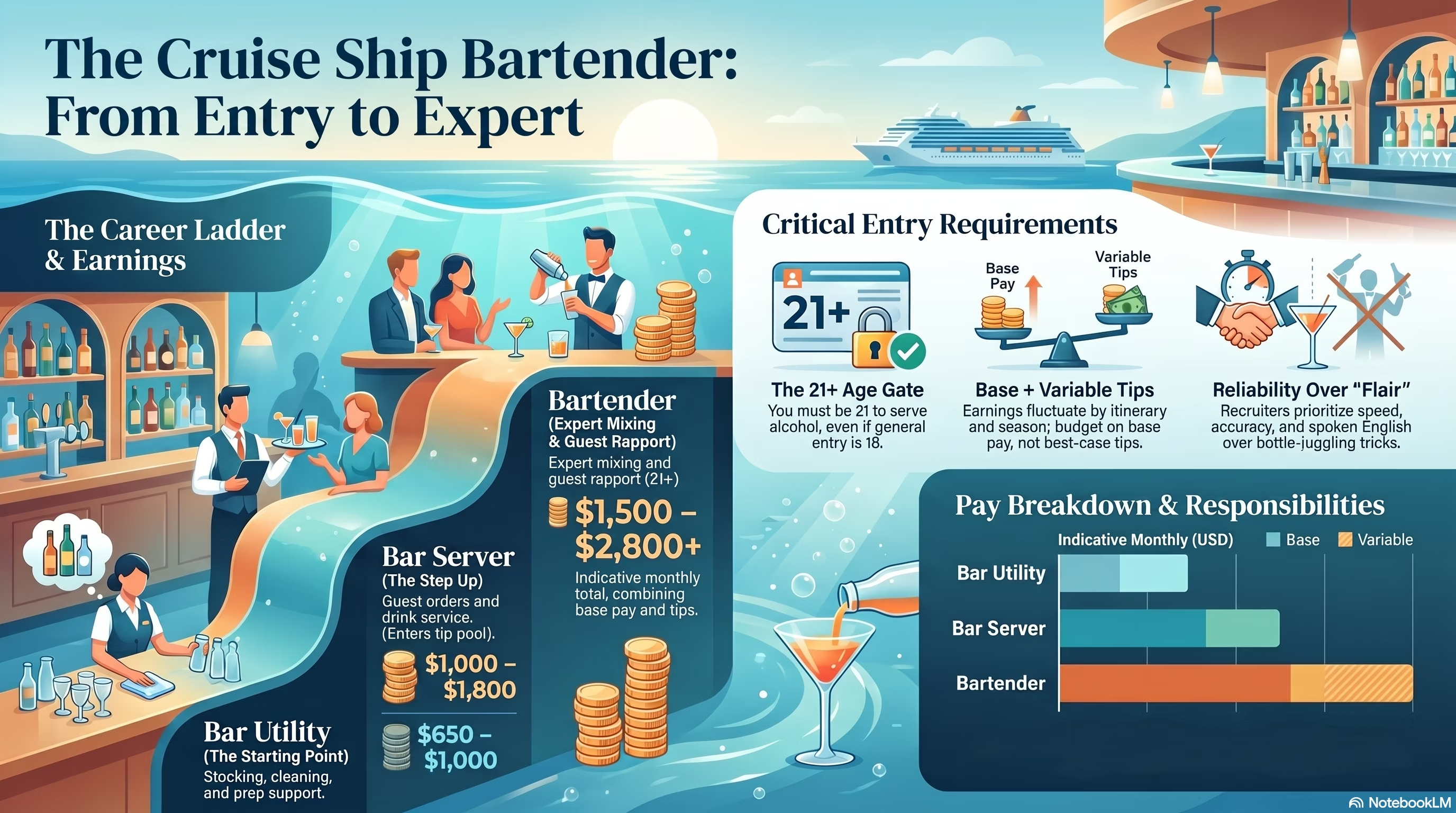
"Of all the cruise hospitality roles, the bar is the one students romanticise most — flair, cocktails, a crowd, and the promise of fat tips. Some of that is real: a good cruise bartender can genuinely out-earn a waiter on a strong tipping itinerary. But there's a hard gate nobody mentions in the reels — you usually must be 21 to work the bar at all, and you almost never start as a bartender. This is the honest, India-specific pathway, the 21+ rule, the real tip story, and a department-wise pay table."
"Sir, I want the bar job — that's where the tips are." I hear this almost every week from students who've watched one too many cruise-bartender reels. And they're not entirely wrong: the bar can be one of the better-earning front-of-house spots on a strong tipping itinerary. But the reels never show the two things that decide whether the bar is even an option for you — the 21+ age rule, and the fact that you almost never start as a bartender. This guide lays out the honest pathway, the real tip story behind the cruise ship bartender salary, what training actually helps, and a grounded pay table. If you're new to the whole picture, start with our pillar on the international cruise line training program, and for full department-wise numbers see our cruise ship salary guide.
The 21+ rule: the gate nobody mentions
Here is the single most important thing to know before you set your heart on the bar. General cruise hospitality entry typically opens at 18, but bar roles that involve serving and handling alcohol almost always require you to be at least 21. This is tied to the alcohol-service age rules cruise lines apply onboard. So a motivated 19-year-old can absolutely join a ship — just not in the bar yet. The smart move is to enter through a role you ARE eligible for at 18 (galley, housekeeping, an F&B service role), build sea time and a track record, and transition to the bar once you cross 21. For the full age-and-eligibility picture across roles, read our cruise ship jobs eligibility guide.
"I'll join the cruise line at 18 and start straight away as a bartender making big tips — that's the plan."
Two problems with that plan. First, the age gate: serving alcohol onboard generally needs you to be 21, so at 18 the bar usually isn't open to you at all. Second, even at 21, cruise lines rarely place a fresher directly behind the bar as a full bartender — you typically start as bar utility or a bar server and earn the bartender role by proving your speed, accuracy, product knowledge and guest skills. The big-tips bartender image is a destination on a ladder, not a starting line. Plan for the climb, not the shortcut.
“I had wonderful time study with perfectional tutor and instructar so glad to be a part of this institution so Genenrally it was the best experience in my life Bcz it helped sharpen my skills thank you for tutor”
The real ladder: bar utility to bar manager
The bar isn't a single job — it's a department with a clear progression, and understanding it kills a lot of false expectations. You generally enter at the bottom, support the bar, and move up as you prove yourself. Here's the typical climb.
Bar utility / bar boy
The support role — stocking, restocking, glassware, ice, cleaning, prepping garnishes, running drinks. Often where the under-21 and the just-joined start. You learn the bar's pace and systems from the ground up.
Bar server / bar waiter
Taking orders and serving drinks to guests around the venues and decks, handling the POS and service charge. Strong English and guest skills matter here, and you start being part of the tip/service-charge pool.
Bartender
Behind the bar, mixing and serving — the role students dream of. Earned by demonstrating speed, accuracy, cocktail/mixology knowledge and guest rapport. This is where bar earnings typically improve.
Head bartender
Leads a bar or a shift, mentors juniors, manages stock and standards, and is accountable for the bar's service and revenue. A supervisory grade reached over multiple contracts.
Bar manager
Runs the bar operation across venues — team, inventory, revenue, training and standards. The top of the onboard bar ladder, built over years of proven performance.
The high-tips reality — honestly
Let's talk about the part everyone really wants to know. The bar's appeal is the earning upside: on top of a modest base wage, front-of-house bar roles share in tips and the automatic gratuity/service charge guests pay. On a busy ship with a strong tipping culture and a high-spending itinerary, a capable bartender can genuinely earn well — sometimes among the better front-of-house earners onboard. But here is the honest other side: tips are variable, not a fixed salary. They swing with the itinerary, the season, ship occupancy, your venue, your role in the pool, and how guests are feeling about spending. Two bartenders on two different ships can earn quite differently. Never plan your finances on a best-case tip month — plan on the base plus a conservative tip estimate, and treat strong months as a bonus. For grounded, department-wise figures rather than reel hype, lean on our cruise ship salary guide.
Cruise ship bartender salary: an indicative table
Below are indicative monthly ranges by bar grade. These are rough, blended figures (base plus typical tip/service-charge share) that vary heavily by cruise line, ship, itinerary and contract — so treat them as a directional guide, not a quote. Always verify the exact structure with the RPSL agency and the actual contract.
| Bar role | Indicative monthly (USD) | What drives the pay | Typical entry |
|---|---|---|---|
| Bar utility / bar boy | ~$650 – $1,000 | Mostly base; limited/indirect tip share | Entry support role; common first step |
| Bar server / bar waiter | ~$1,000 – $1,800 | Base + tip/service-charge pool; guest-facing | After utility, or with F&B service experience |
| Bartender | ~$1,500 – $2,800+ | Base + stronger tip share on good itineraries | Earned after proving yourself; 21+ for alcohol |
| Head bartender | ~$2,500 – $3,800+ | Higher base + tips + leadership grade | Multiple contracts of proven performance |
| Bar manager | ~$3,500 – $5,500+ | Management salary; less tip-dependent | Years of experience up the ladder |
What training and experience actually helps
Recruiters and bar managers aren't hiring flair-bartending tricks — they're hiring reliability under pressure. The things that genuinely move the needle: prior bar or F&B service experience (a hotel, restaurant or pub bar on your CV is a real advantage), confident spoken English to read guests and upsell, sharp grooming, and speed plus accuracy when a venue gets slammed. Genuine mixology knowledge — classic cocktails, proportions, garnishes, responsible service — separates a bar server who's ready for the bartender slot from one who isn't. Flair (the bottle-juggling showmanship) is a nice bonus on some lines, but it is not the core skill and it won't compensate for slow, inaccurate service. Build the fundamentals first.
Is the cruise bar path right for you? An honest self-check
- I am (or will be) 21+ by the time I'd actually work the bar — or I'm happy to enter elsewhere first and transition.
- I'm comfortable starting as bar utility/bar server and earning the bartender role, not walking on as one.
- I have, or am building, real bar/F&B service experience to put on my CV.
- My spoken English is strong enough to read guests, take orders fast and upsell politely.
- I'm willing to learn genuine mixology — classic cocktails, measures, garnishes, responsible service.
- I can stay fast and accurate under pressure during peak service, not just look good doing it.
- I understand tips are variable and I'll budget on base plus a conservative estimate, not best-case months.
- I know no honest institute — including Wings — issues my STCW/CDC or guarantees a bar job or tip income.
"I'll tell the recruiter I want the bartender job because that's where the money is, and I'll learn some flair tricks to stand out."
"I'm 21, I've done a year on a hotel bar, my English is strong, I know my classic cocktails and measures, and I'm happy to start as bar server and earn the bartender slot by proving my speed and accuracy."
Expert Insight
"The biggest mistake under-21 bar dreamers make is sitting at home waiting to turn 21. Don't. The bar values service experience and proven onboard reliability, so the smartest move is to join now in a role you're eligible for at 18 — galley, housekeeping or an F&B service role — build sea time, sharpen your English and grooming, learn your cocktails on the side, and request a bar transfer once you cross 21. You'll reach the bar faster, with a track record, than someone who waited and walked on cold."
Where Wings Institute honestly fits
Let me be completely transparent, because your trust matters more than a quick admission. Wings Institute, training Vadodara students since 2008 with 5,000+ alumni and a 4.8-star rating across 333 reviews, is a hospitality career-readiness academy. We build the things that decide whether a recruiter and a bar manager say yes — food and beverage service standards, grooming, confident spoken English, guest-handling and recruiter-style interview practice. What we do NOT do, and will never falsely claim: we do not issue STCW certificates, we do not issue CDC or INDoS, we have no RPSL manning-agency tie-up that 'places' you on a ship, and we guarantee no job, no salary and certainly no tip income. The 21+ alcohol-service rule, the documents and the hiring are all DG Shipping-regulated and agency-controlled by design. Any institute promising a 'guaranteed bartender job with big tips' is misleading you — and that honesty is exactly the mindset that helps you choose well.
So how do you become a cruise ship bartender from India? Honestly: clear the 21+ gate for alcohol service, enter the industry through a role you're eligible for, climb the bar utility → bar server → bartender → head bartender → bar manager ladder by proving real skill, and build genuine mixology knowledge and strong English along the way. The cruise ship bartender salary can be one of the better front-of-house earners on a good itinerary — but it rests on a modest base plus variable tips, so plan conservatively. Chase the fundamentals, not the flair; respect the ladder, not the shortcut; and verify every requirement against official sources. Do that, and the bar can be a genuinely rewarding chapter of a cruise career.
“One of the best institute for hospitality. faculties are friendly and also show the right way.”

Manan Thakkar
Verified Google ReviewFrequently Asked Questions
What is the salary of a cruise ship bartender?
How do I become a cruise ship bartender from India?
What is the minimum age to be a cruise ship bartender?
Do cruise ship bartenders really make good tips?
What is the cruise bar career ladder?
What training helps you get a cruise bartender job?
Does Wings Institute train cruise bartenders or guarantee a bar job?
“Joining Wings Institute was the best decision I ever made! The environment is so positive and encouraging. The faculty gives individual attention to every student and helps polish our personality, grooming, and interview skills. Truly the best aviation and cabin crew institute in Gujarat.”
Explore Cruise Line Training
Don't just read about it. Experience it. Use our AI tools to assess your current standing for free.
Action Now