

Cruise Course After 12th: Degree vs Diploma vs Certificate (ROI 2026)

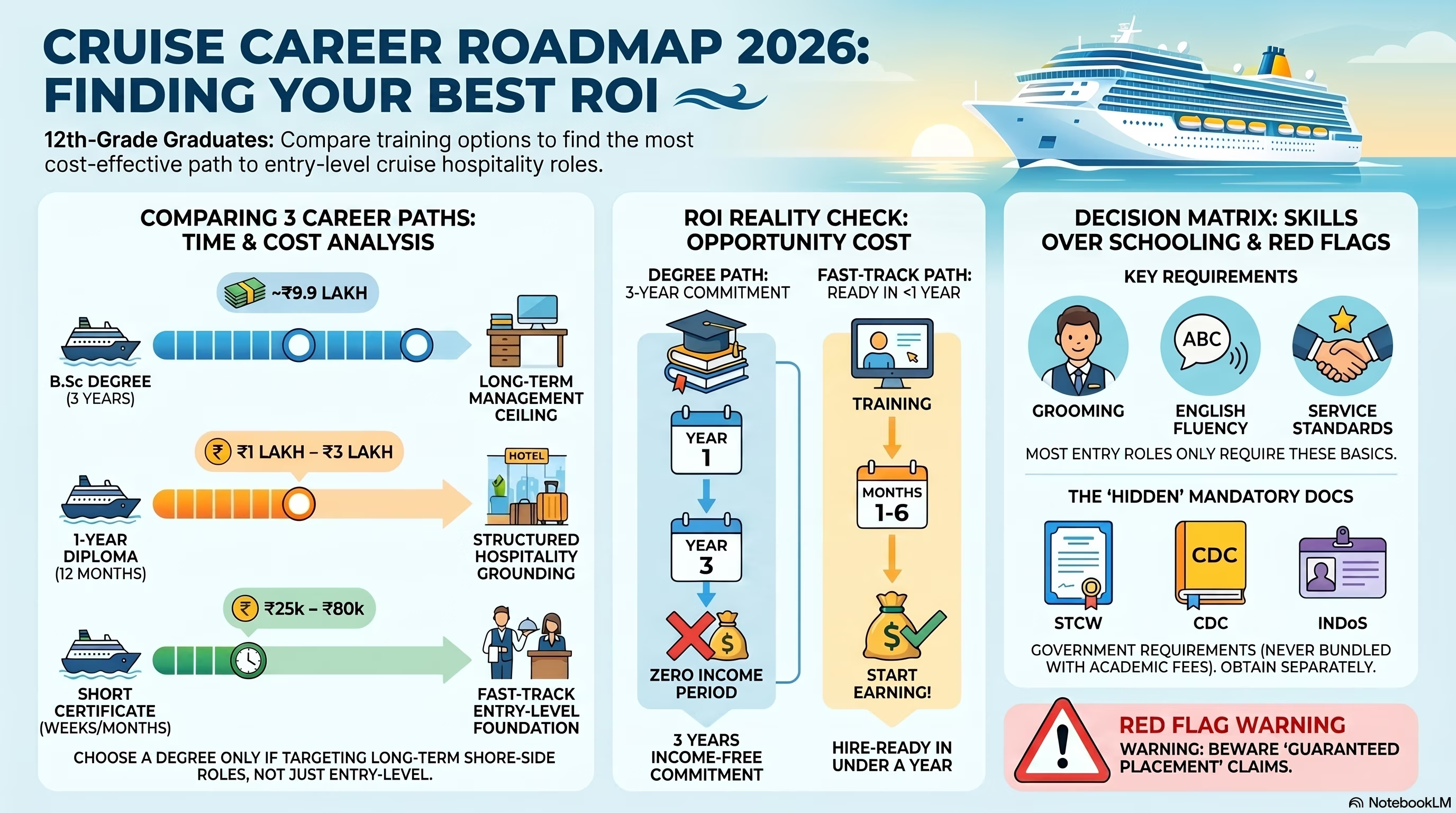
"You have just cleared 12th, you want a cruise-ship career, and now you are staring at four very different options — a 3-year B.Sc in Cruise Line Studies costing nearly ₹10 lakh, a 1-year diploma, a short certificate, or focused career-readiness training. They are not the same product, and the most expensive one is not automatically the best ROI. Here is an honest, India-specific comparison of what each actually buys you, what it costs in time and money, and when each is genuinely worth it."
Almost every week a parent sits across from me in Vadodara and slides a glossy brochure across the desk: 'Sir, this institute says B.Sc in Cruise Line Studies, three years, nine-point-nine lakh. Is this what my son needs to work on a cruise ship?' It is a fair and expensive question. The cruise-education market in India sells at least four very different things under the same dream — a full degree, a one-year diploma, a short certificate, and focused career-readiness training — and the price gap between them is huge. This guide is purely a comparison-and-ROI breakdown, not a fee list (for the full rupee-by-rupee picture see our separate cruise ship course fees breakdown). The goal here is simpler: help you decide which type of course is actually worth your money, given your budget, your timeline, and how far up the ladder you want to climb.
First, the thing every brochure leaves out
Whichever course you choose — degree, diploma, certificate, or career-readiness training — none of them issue the statutory documents that legally let you board a ship. STCW Basic Safety Training, your INDoS number, your CDC (Continuous Discharge Certificate) and your marine medical all come from DG Shipping-approved maritime bodies, on a fixed official process, separately. So when you compare course prices, mentally add the regulated-document cost on top of every option. A degree does not bundle a CDC; a certificate does not skip STCW. This matters because it changes the real ROI: an expensive course is not 'expensive but at least it covers everything' — it usually doesn't. For how those documents work, read our STCW and CDC guide.
The four options, compared on what actually matters
Cost and duration are the easy numbers. The harder question is eligibility (what you need to enrol), what the course actually trains, and — the one nobody answers honestly — when it is genuinely worth it versus overkill. Here is the side-by-side.
“Wings institute is a very best opportunity for me nd my currier give me a chance I comes true my dream”
| Option | Indicative cost | Time | Eligibility | When it's worth it |
|---|---|---|---|---|
| B.Sc Cruise Line / Cruise Line Studies | ~₹9.9 lakh (multi-year) | 3 years | 12th pass, any stream | You want a degree credential plus the long-term ceiling for supervisory, management and shore-side roles, and you can fund 3 years before earning. |
| 1-year cruise diploma | ~₹1 lakh – ₹3 lakh | ~12 months | 12th pass, any stream | You want a structured year of hospitality + cruise grounding and a diploma credential, faster and far cheaper than a degree, without committing to 3 years. |
| Short cruise certificate | ~₹25,000 – ₹80,000 | Weeks to a few months | 12th pass (often 10th for some) | You want a quick, low-cost foundation and you are confident, mature, and ready to move fast to documents and interviews. |
| Institute career-readiness training (e.g. Wings) | Institute-dependent — see fees post | A few months | 12th pass, any stream | You want practical hire-ready skills — service, grooming, spoken English, interview craft — without paying degree money for theory you won't use at entry level. |
"I need a 3-year B.Sc in Cruise Line Studies to get a cruise ship job — without the degree no cruise line will hire me."
Not for entry-level guest-facing roles. The large majority of onboard hospitality jobs — waiter, cabin steward, bar utility, galley assistant, receptionist — are open to a 12th pass of any stream, provided you have the skills, the English, the grooming and the mandatory marine documents. A degree genuinely adds value if you are aiming at supervisory, management or shore-side cruise careers, and it can speed promotion later. But spending ₹9.9 lakh on a degree purely to land an entry-level job you could reach with focused training plus documents is, for many students, poor ROI. Match the credential to the destination, not to the brochure.
Reading the table: where the money really goes
Look at the spread — from roughly ₹25,000 for a short certificate to nearly ₹10 lakh for a degree. That is a 30x-plus range for courses all promising 'cruise jobs'. The degree is not a scam; it is a real academic qualification with a real ceiling. But it is priced for a different outcome than a certificate. The honest framing is: a degree buys credential plus ceiling plus time; a diploma buys structure plus a credential, faster; a certificate buys a quick foundation; career-readiness training buys the specific, practical skills a recruiter screens for. If your goal is simply to get hired into an entry role and start earning, paying degree money for academic theory you will not use on deck is where ROI quietly leaks away.
The ROI lens: time-to-earn and opportunity cost
ROI on education is not just fee divided by salary — it is also how long your money is locked up before you earn, and what you give up in the meantime. A 3-year degree means three years of fees and no cruise income, then statutory documents on top, before your first contract. Career-readiness training plus documents can make a focused student hire-ready in well under a year. For a fresher whose priority is to start earning in USD and build sea time, the faster route often wins on pure ROI — provided the training genuinely makes you employable. The degree wins when your target is the higher-ceiling roles where the credential meaningfully changes which jobs you can apply for. Neither is universally 'better'; they optimise for different things.
Decision checklist: which cruise course fits you?
- My goal is an entry-level guest-facing job and earning fast → certificate or career-readiness training plus documents usually beats a degree on ROI.
- My goal includes supervisory, management or shore-side cruise roles long-term → a degree's ceiling may justify the cost and time.
- I can fund 3 years with no income before I earn → a degree is financially feasible; if not, lean shorter.
- I want a recognised credential but not a 3-year commitment → a 1-year diploma is the middle path.
- I am confident, mature and ready to move quickly to STCW, CDC and interviews → a short certificate may be enough foundation.
- Whatever I pick, I have budgeted the statutory documents (STCW, INDoS, CDC, medical) on top — no course bundles these.
- I have verified the institute does not 'guarantee' a job for a fee, and that any maritime certificate it claims is actually DG Shipping-approved.
Expert Insight
"Before you commit to the most expensive option, ask the institute one blunt question: 'For the specific entry role I want, is this degree a hiring requirement, or a nice-to-have?' For guest-facing hospitality roles the honest answer is almost always 'nice-to-have'. That doesn't make a degree worthless — it makes it a long-term investment you should choose deliberately, not a default you pay for out of fear. And never let a 'guaranteed placement' line justify a premium fee; genuine cruise hiring runs through RPSL-licensed agencies and the cruise lines, not through your course provider."
Where Wings Institute fits — stated honestly
Wings Institute, training Vadodara students since 2008, is a career-readiness academy — not a maritime university and not a statutory certifying body. Our cruise-line training builds exactly what recruiters screen for: international service standards, food and beverage and housekeeping fundamentals, grooming, spoken English fluency and recruiter-style interview practice. Here is the boundary, stated plainly so no one can mislead you: we do NOT issue STCW certificates or CDC/INDoS, we have NO RPSL manning-agency tie-up that 'places' you, and we do NOT guarantee jobs or a salary. Those documents come from DG Shipping-approved bodies and hiring rests with the cruise lines and their licensed agencies. We make you hire-ready and point you cleanly to the official channels. For the full programme view, see our international cruise line training program pillar, and for the joining route step by step, our hub on how to get a cruise ship job in India after 12th.
So which cruise course should you do after 12th? The honest answer is: the one whose outcome matches your goal, not the one with the biggest fee. If you want the highest long-term ceiling and can fund the time, a degree earns its keep. If you want to get hire-ready and start earning fast, focused career-readiness training plus the regulated documents is often the stronger ROI. A diploma sits sensibly in between, and a short certificate is the lean starting line for the confident and ready. Whatever you choose, budget the statutory documents on top, verify every claim against dgshipping.gov.in, and treat any 'guaranteed cruise job' package as a red flag. Spend deliberately, and your money buys a real career — not just a certificate on the wall.
“One of the best institute for hospitality. faculties are friendly and also show the right way.”

Manan Thakkar
Verified Google ReviewFrequently Asked Questions
What course should I do after 12th for a cruise ship job?
Is a B.Sc in Cruise Line Studies worth it?
Do I need a degree to work on a cruise ship?
Which is better — a cruise diploma or a certificate?
Does the cruise course fee include STCW and CDC?
Does Wings Institute offer a cruise degree or guarantee a job?
What is the cheapest way to start a cruise ship career after 12th?
Will a degree get me a higher cruise ship salary?
“Joining Wings Institute was the best decision I ever made! The environment is so positive and encouraging. The faculty gives individual attention to every student and helps polish our personality, grooming, and interview skills. Truly the best aviation and cabin crew institute in Gujarat.”
Explore Cruise Line Training
Don't just read about it. Experience it. Use our AI tools to assess your current standing for free.
Action Now