
Cabin Crew to Pilot: The 2026 Transition Pathway (India)
"Every cabin crew member who watches the flight deck door close has wondered: could that be me one day? In India, the answer is increasingly yes. Several serving crew have moved from the cabin to the cockpit by pursuing a Commercial Pilot Licence on the side. Here's how the realistic — not glamorised — transition works in 2026."
The cabin-to-cockpit move is one of the most aspirational journeys in aviation — and in 2026 it's more visible than ever as India's airlines expand. But it's a serious commitment of money, study and medical fitness, not a quick promotion. This guide lays out the honest pathway, the costs, and where institutes like Wings fit (and don't fit) in the picture.
Can Cabin Crew Actually Become Pilots?
Yes — but it's a fresh qualification, not an internal upgrade. Becoming a pilot requires a Commercial Pilot Licence (CPL), which in India is issued by the DGCA and earned only at DGCA-approved flying training organisations (FTOs). Cabin crew have a real advantage here: deep familiarity with aircraft, crew culture, safety procedures and airline operations. Many serving crew study ground subjects during rosters and build flying hours on leave.
The CPL Pathway, Step by Step
The route is regulated and sequential. You can't shortcut the medical or the flying hours. Note clearly: Wings Institute provides cabin crew, hospitality and aviation-services training (diplomas and certifications) — it does not offer CPL or flying training. The steps below are the generic industry pathway through DGCA-approved providers.
“It's a great institute to learn and develop skills.”
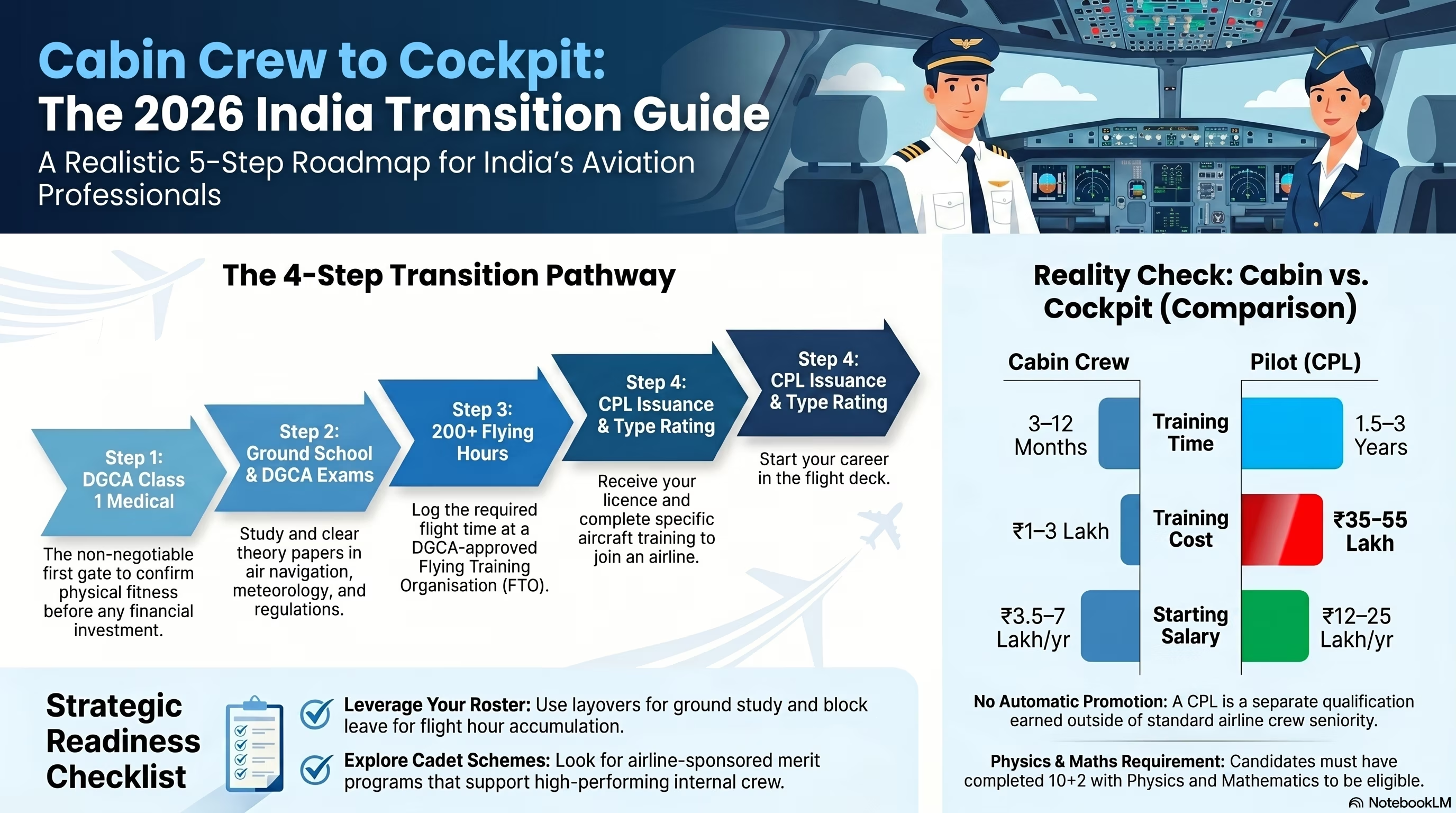
Class 1 Medical
Pass a DGCA Class 1 medical examination — the non-negotiable first gate.
Ground School & DGCA Exams
Study and clear theory papers (air navigation, meteorology, regulations, etc.).
Flying Hours
Log the required hours (200+) at a DGCA-approved flying school.
CPL Issue
On meeting exam + hour requirements, DGCA issues your Commercial Pilot Licence.
Type Rating & Airline
Complete an aircraft type rating and apply / convert via airline programmes.
| Factor | Cabin Crew | Pilot (CPL route) |
|---|---|---|
| Entry qualification | 10+2 + cabin crew training | 10+2 with Physics & Maths |
| Training time | 3–12 months | 1.5–3 years (CPL) |
| Approx. training cost | ₹1–3 lakh | ₹35–55 lakh (CPL) |
| Medical | Standard cabin crew medical | DGCA Class 1 medical |
| Issuing authority | Airline-set standards | DGCA (licence) |
| Typical starting pay | ₹3.5–7 lakh/yr | ₹12–25 lakh/yr (FO, varies) |
"Airlines automatically promote experienced cabin crew into pilot roles."
There is no automatic promotion. Becoming a pilot always requires a separate CPL earned at a DGCA-approved flying school. That said, some airlines run merit-based or sponsored cadet schemes that can support motivated crew through the transition.
Funding the Transition & Airline Support
The biggest hurdle is cost — a CPL in India typically runs ₹35–55 lakh, before type rating. Crew fund this through savings, education loans, or, in fortunate cases, airline merit or sponsored cadet programmes that support promising candidates. Earning a cabin crew salary while you study ground subjects makes the path more manageable than for an unemployed fresher. Begin with a solid aviation foundation — many start in the cabin via our air hostess training before deciding to pursue the cockpit.
Expert Insight
"Time your flight-deck dream around your roster. Use layovers to study ground subjects, schedule flying-hour blocks during leave, and clear your Class 1 medical before spending on anything else — there's no point investing lakhs if a medical issue blocks you. To benchmark the income jump, run both roles through our salary & ROI calculator, and explore broader airport management options if you prefer ground-side growth."
Thinking of the Cockpit? Start Here
- Confirm 10+2 with Physics & Maths (or bridge it)
- Book and pass a DGCA Class 1 medical first
- Research only DGCA-approved flying schools
- Build a realistic ₹35–55 lakh funding plan
- Ask your airline about cadet/sponsored schemes
- Use rosters to study ground subjects steadily
- Keep flying logbook and documents meticulous
The cabin-to-cockpit journey is demanding but absolutely real for the committed. It rewards planning, financial discipline and medical fitness above all. Wings can launch your aviation career in the cabin and sharpen your interview and English skills — and if the cockpit calls, you'll make that leap through a DGCA-approved flying school, from a position of experience rather than guesswork.
“Pleasnt atmosphere , freely natured staff , luv to studying here.”

mitu rana
Verified Google ReviewFrequently Asked Questions
Can cabin crew become pilots in India?
Does Wings Institute offer pilot or CPL training?
How much does pilot training cost in India in 2026?
What is the first step to becoming a pilot from cabin crew?
How long does it take to go from cabin crew to pilot?
“Joining Wings Institute was the best decision I ever made! The environment is so positive and encouraging. The faculty gives individual attention to every student and helps polish our personality, grooming, and interview skills. Truly the best aviation and cabin crew institute in Gujarat.”
Explore Cabin Crew Training
Don't just read about it. Experience it. Use our AI tools to assess your current standing for free.
Action Now