

Cabin Crew Life and Work: Rosters, Layovers & DGCA Rest Rules

"The glamour photos hide the real rhythm of the job: pre-dawn report times, a roster you read like a second language, and rest rules written by regulators to keep you safe. Here is an honest day-in-the-life of Indian cabin crew in 2026 — schedules, layovers and the DGCA limits that protect you."
Ask any experienced flight attendant and they will tell you the same thing: cabin crew life is wonderful and demanding in equal measure. The Instagram version — coffee in a new city, uniform looking sharp — is real, but so are the 4 a.m. alarms and the discipline of reading your roster. The good news for anyone considering this career from Vadodara or anywhere in India is that the lifestyle is heavily regulated for safety. DGCA's duty and rest rules exist precisely so the job stays humane. At Wings Institute, Alkapuri, we believe freshers deserve the honest picture before they train.
A real day on a domestic roster
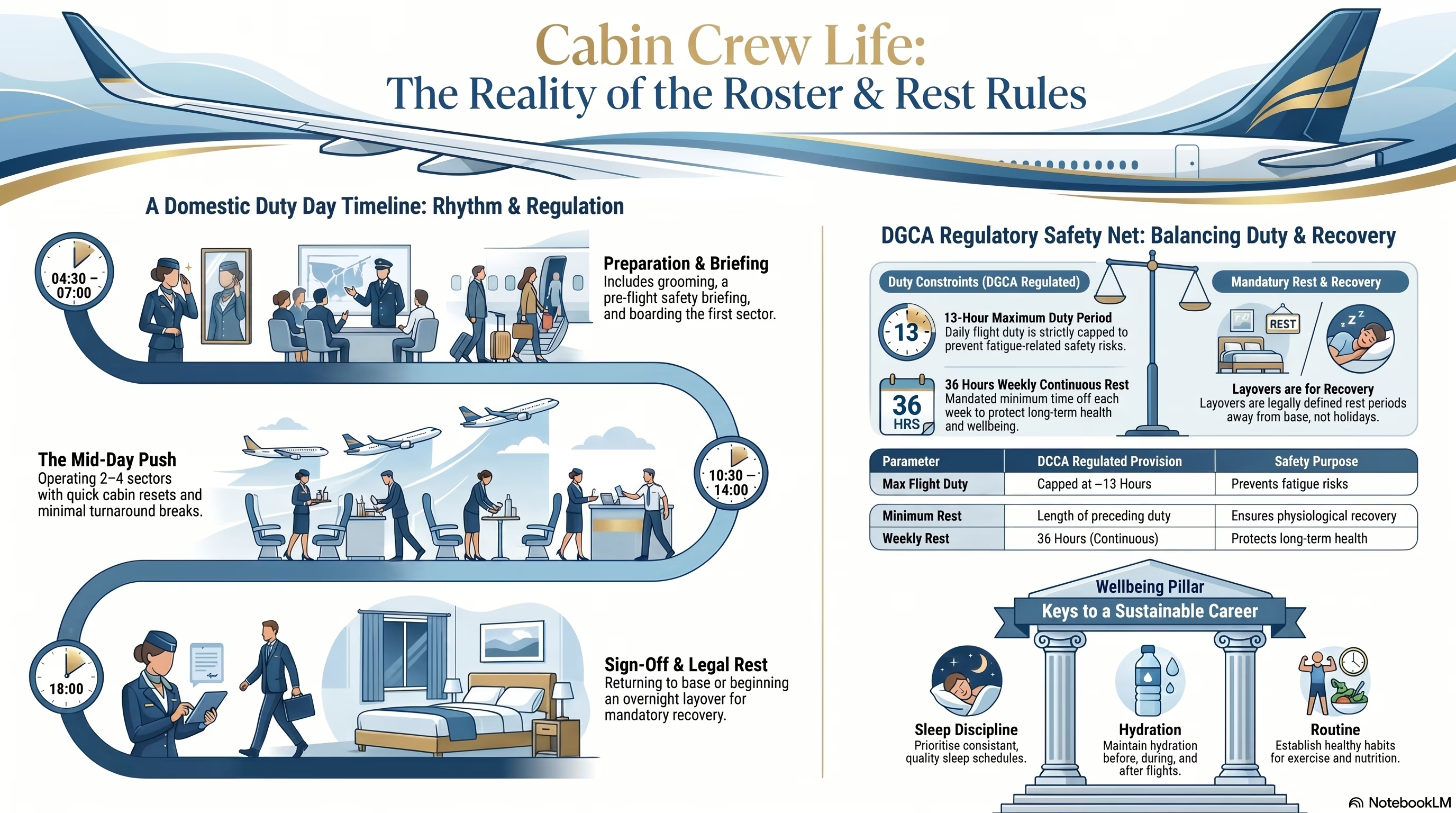
A typical domestic duty might start with a report time 60–90 minutes before departure for the pre-flight briefing, security checks and cabin preparation. You may then operate two to four sectors — a 'sector' is one take-off and landing — with quick turnarounds in between, before signing off at your home base or night-stopping in another city. No two days look identical, which is part of the appeal and part of the challenge.
Wake & groom
Early report times are normal; uniform and grooming must be flight-ready before you leave home.
Report & briefing
Crew briefing on the day's sectors, safety, special passengers and service flow.
Sector 1
Boarding, safety demo, in-flight service, securing the cabin for landing.
Turnaround
Quick cabin reset, restock, board next passengers — minimal break.
Sectors 2–3
Repeat the service and safety cycle; manage fatigue and hydration.
Sign-off or night-stop
Return to home base for legal rest, or layover overnight in another city.
“Best institute for the Aviation course.”
How to read your roster
Your roster is published in advance and uses codes for flying duties, standby, reserve, training, leave and off-days. Learning to read it quickly is a survival skill — it tells you when to sleep, when to be reachable, and when you are truly free. Standby (or 'reserve') means you must be ready to be called to operate a flight at short notice, so even an off-looking day may carry an obligation.
| Parameter | Typical regulated provision | Why it exists |
|---|---|---|
| Maximum flight duty period | Capped (commonly up to ~13 hours, reduced by sectors) | Prevents fatigue-related safety risk |
| Minimum rest after duty | At least as long as the preceding duty (with a floor) | Ensures physiological recovery |
| Weekly rest | A minimum continuous rest period each week (~36 hours) | Protects long-term health |
| Night duty / layovers | Additional limits and rest for night operations | Counters circadian disruption |
| Cumulative duty caps | Limits over rolling weeks/month/year | Avoids chronic overwork |
"Cabin crew can be made to fly endlessly with no proper rest because airlines control the schedule."
Indian cabin crew duty hours and rest are governed by DGCA Flight Duty Time Limitation (FDTL) rules. There are caps on flight duty, mandated minimum rest after duty, a weekly rest requirement and limits on night operations. The framework is built around crew physiological recovery.
The truth about layovers
A layover is the rest period away from base between duties. A short one may be just enough to sleep and refresh; a longer overnight can let you see a new city. Seasoned crew protect their sleep first and sightsee second — chronic under-sleeping is the fastest way to burn out. Layovers are a perk, but they are fundamentally rest, not holiday.
Wellbeing: making the lifestyle sustainable
Irregular hours, time-zone shifts and constant people-facing work tax the body and mind. Crew who thrive build routines: consistent hydration, deliberate sleep hygiene, regular fitness, and staying connected with family despite the schedule. The regulated rest rules give you the space — using it well is on you.
Expert Insight
"Before you commit, spend a week mimicking crew sleep discipline: early alarms, strict hydration, no late screens. If you can hold a routine, you will love this job. Our placements stories feature crew describing how they adapted — read them to set realistic expectations."
Cabin crew life is not the non-stop glamour of social media, nor is it the exhausting free-for-all that myths suggest. It is a structured, regulated, deeply rewarding profession for people who enjoy travel, service and variety — and who respect the discipline it demands. Wings Institute in Vadodara prepares freshers for the real rhythm, not just the interview. Explore air hostess training to begin, and use our salary & ROI calculator to plan the financial side of the career.
“Currently I'm pursuing my Aviation course from wings institute. The way they teach I'm extremely grateful to be a part of wings institute. They are not only give the bookies knowledge but also teach how to deal with any situations.”

Aatika vhora
Verified Google ReviewFrequently Asked Questions
What do DGCA rest rules mean for cabin crew working hours?
What is a layover in cabin crew life?
How does a cabin crew roster work?
Is being cabin crew a tiring job?
Do cabin crew get weekly off days?
“Joining Wings Institute was the best decision I ever made! The environment is so positive and encouraging. The faculty gives individual attention to every student and helps polish our personality, grooming, and interview skills. Truly the best aviation and cabin crew institute in Gujarat.”
See Placement Stories
Don't just read about it. Experience it. Use our AI tools to assess your current standing for free.
Action Now